
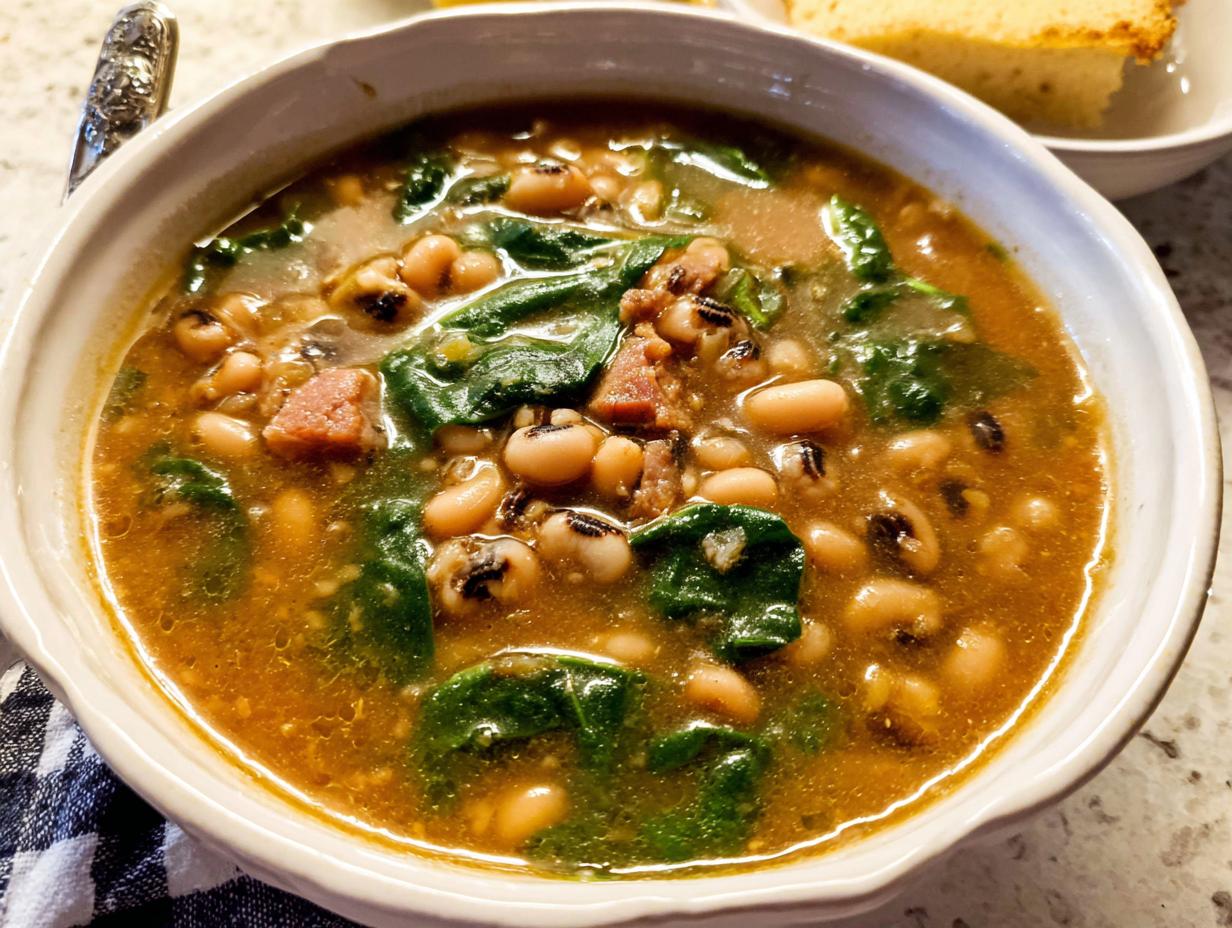
Okay, let’s talk soup! I remember standing in my kitchen, feeling that familiar chill in the air, and thinking, “I want something warm, something that hugs me from the inside out.” And you know what? My first attempt was this incredible black-eyed pea soup. It’s inspired by my Lebanese-Italian roots, where tradition and love are simmered into every dish. Making soup became my gateway to exploring flavors from all over the world – a little bit of global fusion, if you will. It’s not just about filling your belly; it’s about connection and pure comfort. That’s why I’m so excited for you to dive into The Ultimate Soup Recipes Guide for Beginners with me. We’re going to make simple, delicious, and super accessible soups that taste like a warm hug. No fancy tricks needed!
Why This Easy Black-Eyed Pea Soup is Perfect for Beginners
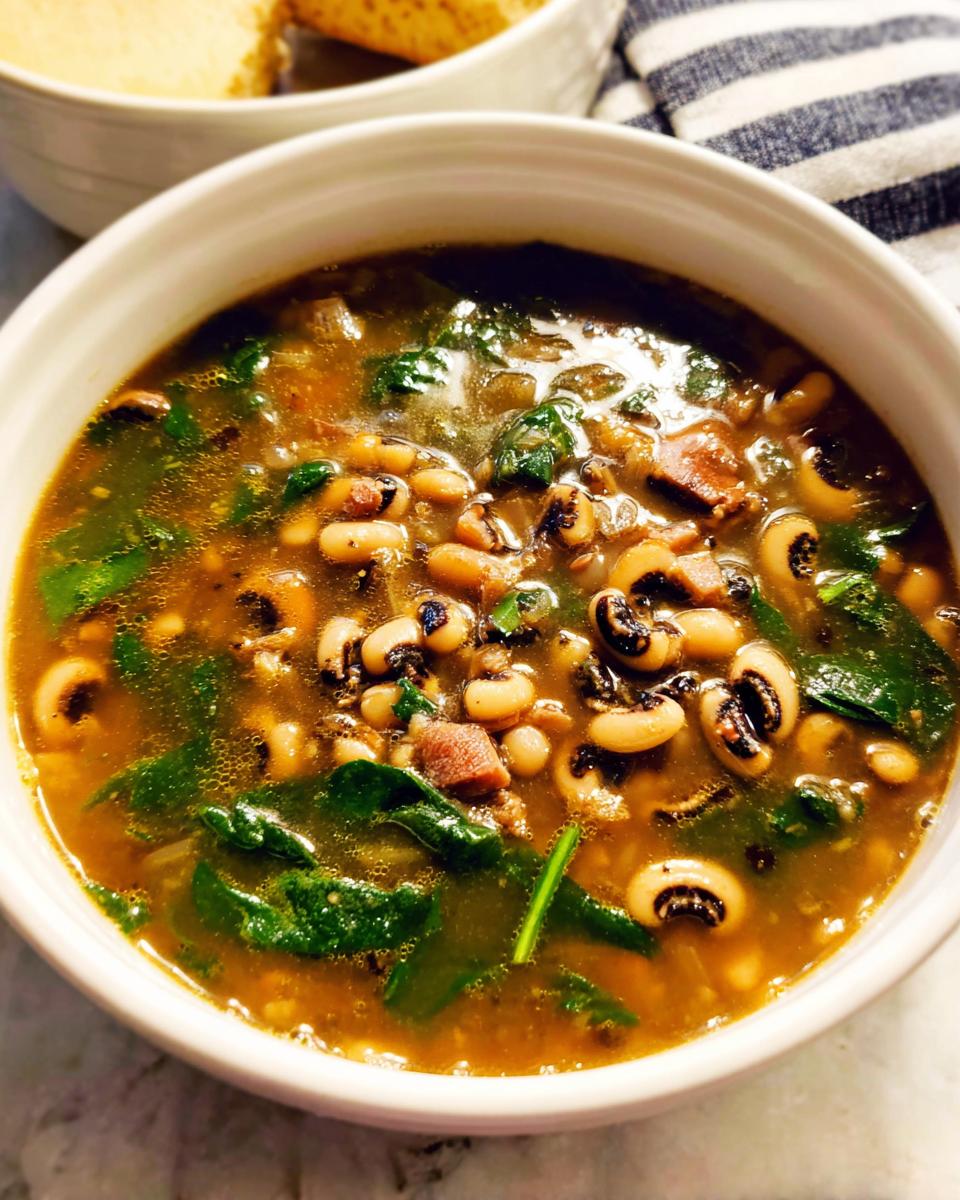
Alright, so you’re ready to dip your toes into the wonderful world of soup making? Fantastic! This black-eyed pea soup is seriously your best friend for these first steps. It’s unbelievably simple, uses ingredients you probably already have, and tastes like pure comfort in a bowl. Think of it as your friendly introduction to the magic that happens in a pot. It’s a fantastic starting point in The Ultimate Soup Recipes Guide for Beginners because it builds confidence without any fuss. You’ll be amazed at how delicious something so straightforward can be!
Key Features of This Beginner-Friendly Soup
Here’s why this soup rocks for new cooks:
- Super Quick Prep: Most of the work happens while the peas simmer.
- No Fancy Techniques: Just basic chopping and sautéing.
- Easy-to-Find Ingredients: Nothing exotic here, just pantry staples.
- Guaranteed Delicious Results: It’s hard to mess this one up, and the payoff is HUGE!
Gathering Your Ingredients for The Ultimate Soup Recipes Guide for Beginners
Alright, let’s get our ducks in a row – or rather, our ingredients! To make this heartwarming black-eyed pea soup, you’ll need:
- 1 pound dried black-eyed peas
- 4-5 slices thick, chopped bacon (this is where a lot of flavor comes from!)
- 1/2 pound ham hocks (trust me, these are flavor bombs, but smoked turkey works too!)
- 1 large onion, diced (aim for about 1½ cups)
- 2 stalks celery, diced (about ½ cup)
- 1 tablespoon minced garlic (because garlic makes everything better!)
- 2 teaspoons minced fresh thyme
- 1-2 bay leaves
- 6-7 cups chicken broth or water (broth adds more depth, but water is fine!)
- 2 teaspoons Creole seasoning (gives it that little kick!)
- 1½ cup fresh chopped spinach
- Salt and pepper, just to taste
See? Nothing too fancy, right? It all comes together beautifully.
Ingredient Notes and Substitutions
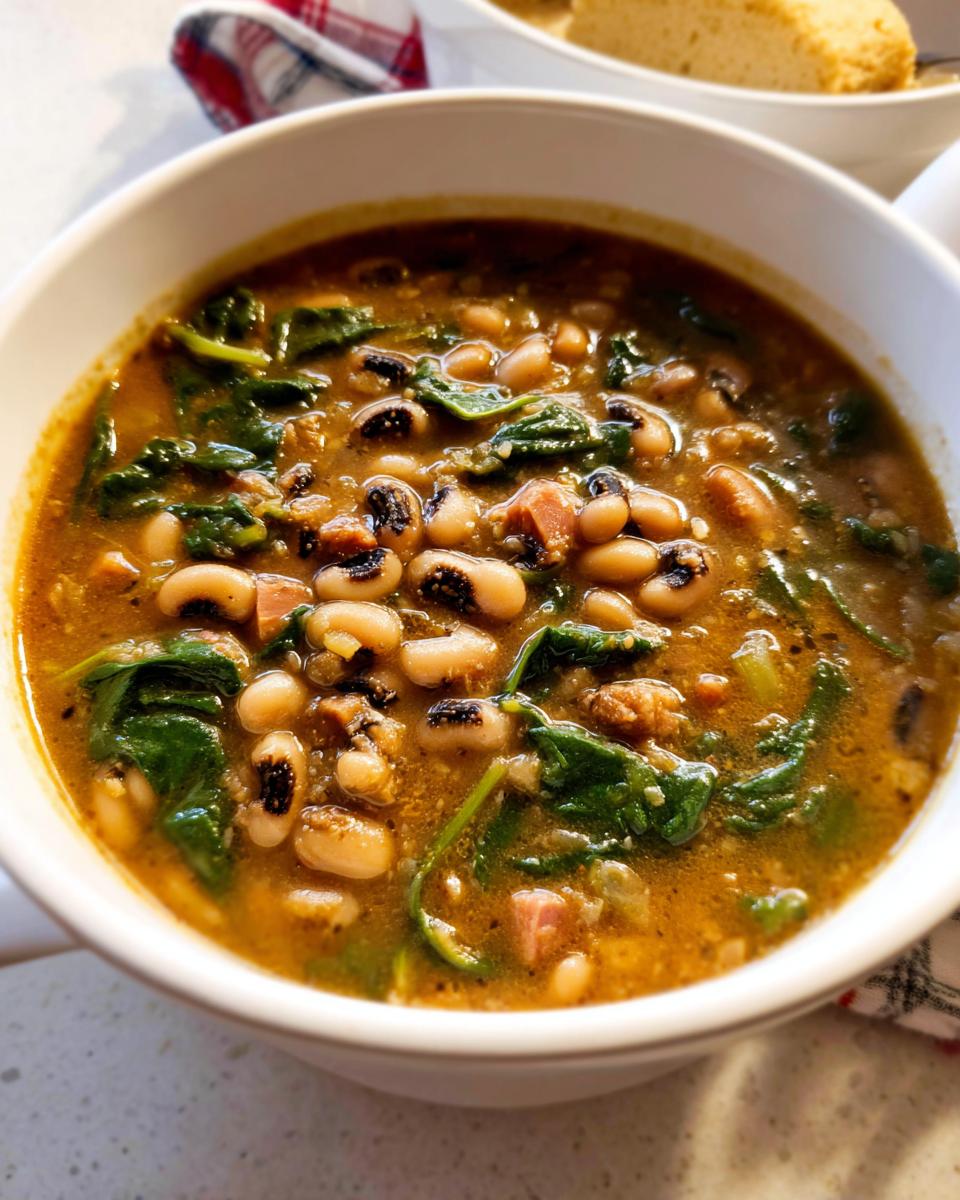
Now, about those black-eyed peas: don’t skip the soaking! You can soak them for 2-3 hours in cold water, or for an even richer flavor and softer beans, try soaking them with about three tablespoons of salt for 3-4 hours. If you’re really in a pinch, you can do a quick soak: cover them with water, boil them for a minute, then turn off the heat and let them sit for an hour. The ham hocks are amazing for that smoky, savory depth, but if you can’t find them, a couple of smoked turkey wings work beautifully. And that Creole seasoning? It’s my secret weapon for a little warmth, but you can swap it for a mix of paprika, cayenne, and other savory spices if you don’t have it on hand.
Step-by-Step Instructions for Your First Soup
Okay, superstar chef, let’s get this soup cooking! This part is super important for building confidence as you master The Ultimate Soup Recipes Guide for Beginners. First things first, grab a big bowl and cover those dried black-eyed peas with cold water. Let them hang out and soak for about 2 to 3 hours. This really helps them soften up! Then, find your biggest, heaviest pot – the one that feels solid. Toss in your chopped bacon and let it get nice and crispy over medium heat for about 5 to 6 minutes. Don’t drain all that yummy fat! Next, add the ham hocks and let them sizzle for another 5 minutes. Now, toss in your diced onions, celery, minced garlic, thyme, and those fragrant bay leaves. Sauté them for just 3 to 5 minutes until the onions start to look soft and a little see-through. Pour in your chicken broth or water – about 6 to 7 cups should do it. Drain and rinse those soaked peas, then dump them right into the pot. Sprinkle in that Creole seasoning, plus salt and pepper to your liking. Give it all a good stir, bring it to a boil, then turn the heat down low, cover it up, and let it simmer for about 30 minutes. Give it a stir now and then to make sure nothing sticks. You want those beans to be tender! Once they’re almost there, stir in that fresh spinach. If your soup looks a little too thick, don’t sweat it – just add a bit more broth or water until it’s nice and soupy. Finally, fish out those bay leaves, taste it one last time, adjust the salt and pepper if needed, and get ready to serve!
Tips for Perfecting Your Black-Eyed Pea Soup
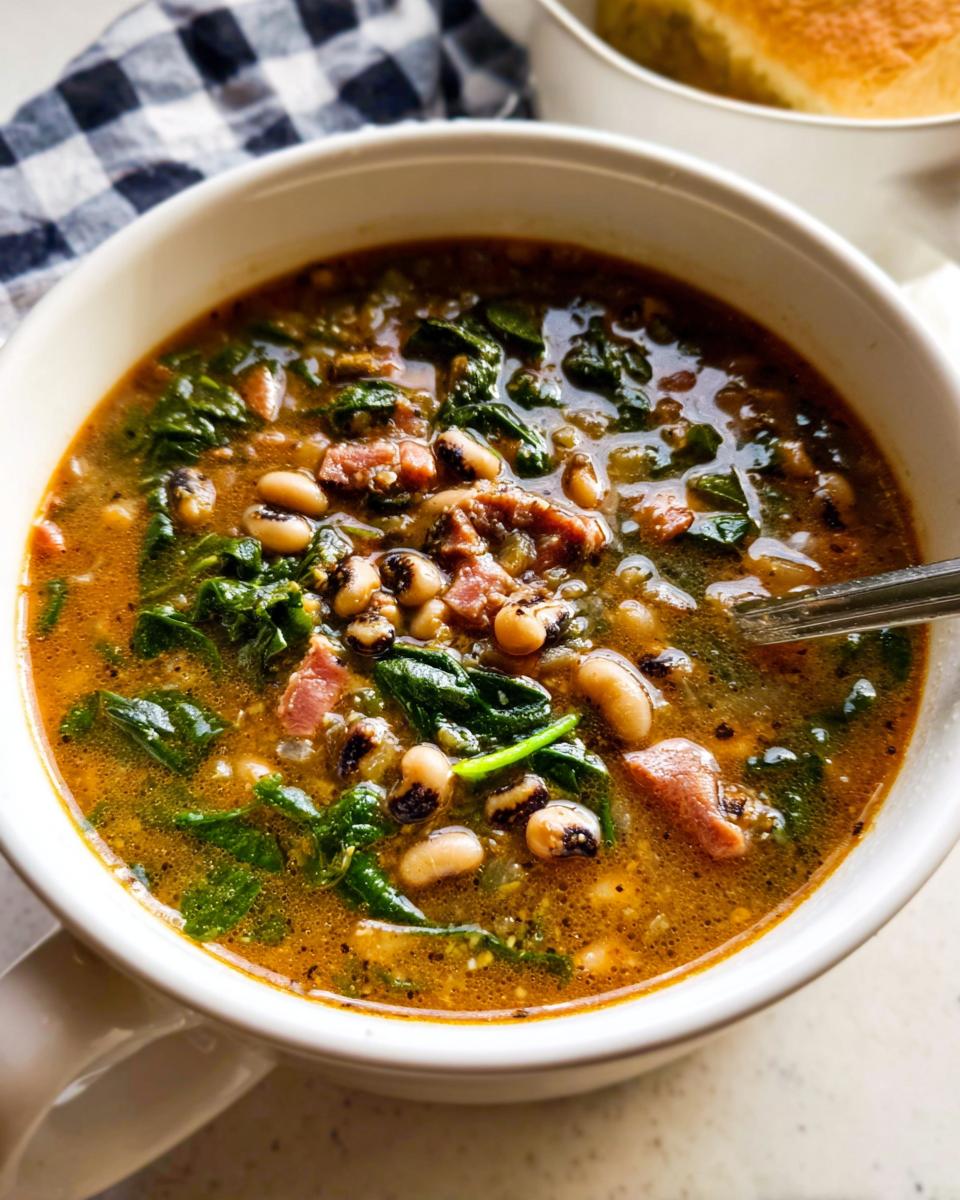
Listen, this soup is pretty forgiving, but here are a few little secrets from my kitchen to yours. When it’s simmering, give it a stir every so often; this just makes sure everything cooks evenly and nothing clings to the bottom. If it starts getting too thick for your liking, just add a splash more broth or water to get that perfect soupy consistency. You want to check your beans to see if they’re tender – they should be soft when you bite into them, not hard. And super important: don’t forget to pull out those bay leaves before you serve! They’ve done their job adding flavor, but they aren’t too fun to chew on. Trust me, these little bits of advice will make your soup sing!
Essential Equipment for Making Soup
Alright, so what do you need to whip up this amazing soup? Don’t worry; it’s not complicated! You’ll want a large bowl for soaking those peas – gotta give them room to expand! And the star of the show is a large, heavy pot. Trust me, a heavy pot is your best friend here. It heats food more evenly and helps prevent scorching, which means less fuss and more flavor for you. That’s pretty much it to get started!
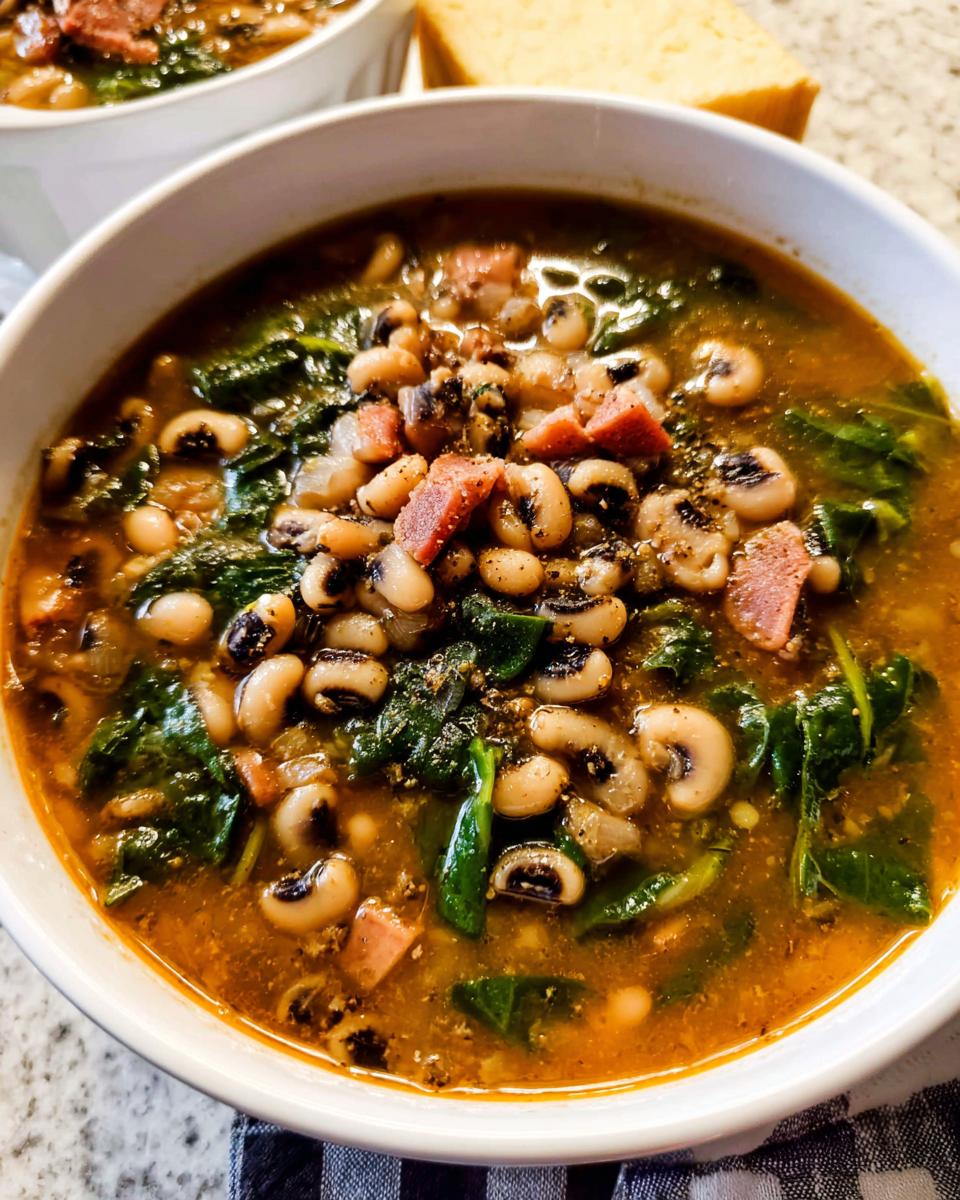
Serving Suggestions for Your Cozy Comfort Food
Now that you’ve whipped up this glorious black-eyed pea soup, how do you make it even more special? The absolute best way is with some crusty bread! Think a warm baguette or some hearty sourdough. Dipping that into the savory broth is pure bliss. It’s the ultimate comfort food move! For another delicious idea, check out my Classic Homestyle Chicken Noodle Soup for more cozy vibes.
Frequently Asked Questions About Beginner Soup Recipes
Got questions about whipping up your first pot of soup? I totally get it! Here are some things beginners often ask:
Can I make this soup without ham hocks?
Absolutely! If you can’t find ham hocks or just want a different flavor, smoked turkey wings are a fantastic substitute. You could even try a couple of thick-cut smoked bacon slices and a bay leaf for a lighter, smoky flavor. The goal is to get that savory depth, and you have options!
How long does it take to cook dried black-eyed peas?
With soaking, the cooking time is usually around 30-40 minutes until they’re tender. If you skip the soaking and go for the quick soak method, it might take a tiny bit longer, maybe 45-50 minutes. Remember, they should be soft enough to eat easily.
Can I freeze this soup?
Yes, you can! Let the soup cool completely, then store it in airtight containers or freezer bags. It should be good in the freezer for about 2-3 months. When you’re ready to eat, just thaw it in the fridge overnight and reheat it gently on the stove.
What if my soup is too thick or too thin?
No problem at all! If it’s too thick, just stir in a little more chicken broth or water until you reach your desired soupy consistency. If it’s a bit too thin for your liking, you can let it simmer uncovered for a bit longer. This will help some of the liquid evaporate and thicken the soup naturally. Easy peasy!
Understanding Nutritional Information for Your Soup
So, what are you getting nutrition-wise with this hearty black-eyed pea soup? While every kitchen can be a little different, here’s a general idea per serving:
Calories: Approx. 345
Protein: Approx. 10g
Carbohydrates: Approx. 22g
Fat: Approx. 4g
Keep in mind these are just estimates! Things like the exact type of chicken broth or how much bacon fat you leave in can change these numbers a bit. It’s a really satisfying meal that’s packed with good stuff, though!
Share Your Soup Journey!
Now that you’ve got this amazing black-eyed pea soup bubbling on the stove, I’d absolutely LOVE to hear all about it! Did you try it? How did it turn out? Drop a comment below with your experience, maybe give it a rating, or even tag me on social media with photos of your delicious creation. It makes my day seeing what you all make! You can always reach out here if you have any questions!
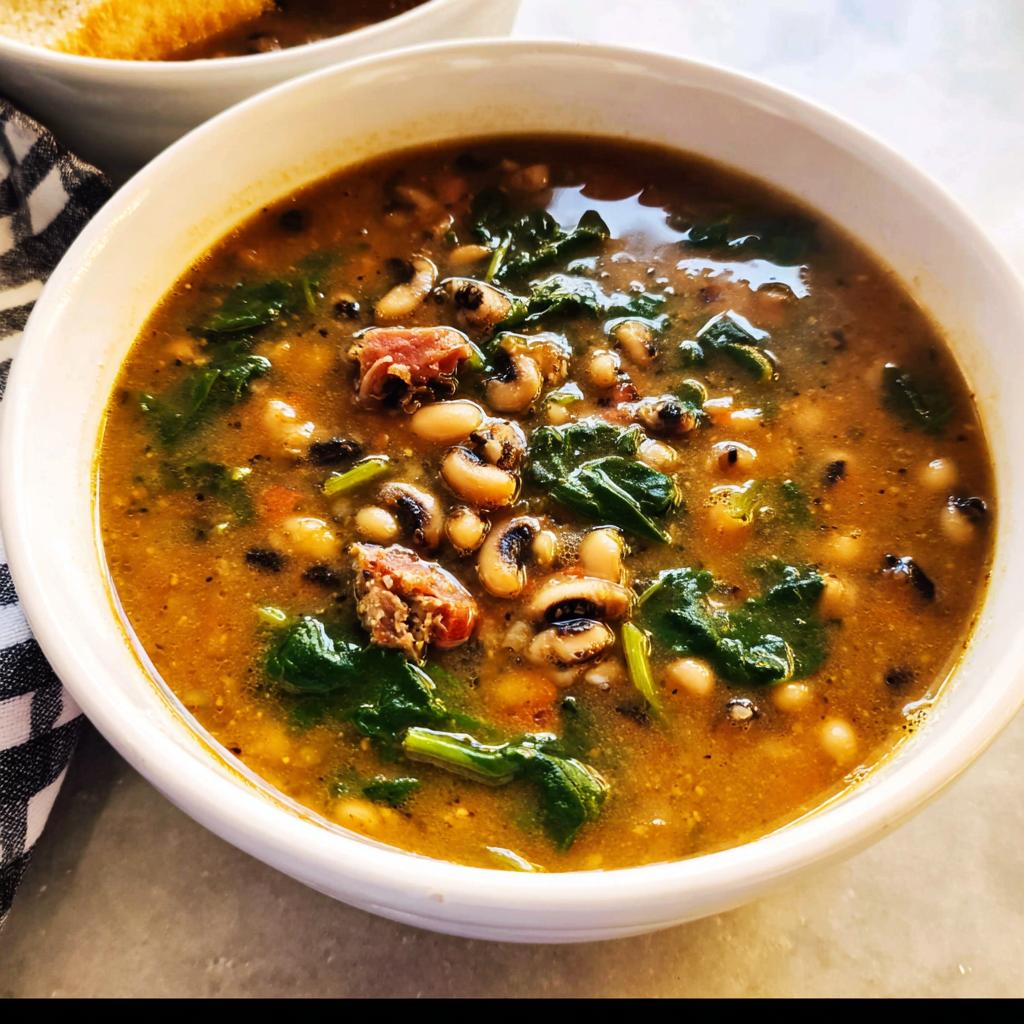
Easy Black-Eyed Pea Soup for Beginners
Ingredients
Equipment
Method
- Add the dried black-eyed peas to a large bowl and cover with cold water. Let them sit for 2-3 hours.
- In a large, heavy pot, sauté chopped bacon until brown and crispy, 5-6 minutes.
- Add the ham hocks and sauté for 5 minutes.
- Add the onions, celery, garlic, thyme, and bay leaf and sauté for about 3-5 minutes until the onions are wilted.
- Pour in the chicken broth or water.
- Drain the soaked beans, rinse, and place them in the pot. Season with Creole seasoning, salt, and pepper to taste. Stir and bring to a boil.
- Reduce heat, and simmer, covered, for about 30 minutes while stirring occasionally, or until the beans are tender and have the desired consistency.
- Add the fresh chopped spinach.
- Add more stock or water if your beans become thick and dry. The texture of the beans should be soupy.
- Remove the bay leaves and adjust seasoning if needed. Serve with fresh bread.
Nutrition
Notes
Tried this recipe?
Let us know how it was!
Master of Global Fusion Innovation
My culinary adventure reflects my Lebanese-Italian heritage and a decade spent in the dynamic fusion restaurant scenes of Miami and Barcelona. I’ve made it my mission to prove that beloved global comfort foods can be successfully adapted for low-carb living without losing their soul, their cultural authenticity, or their ability to comfort.
With advanced training in molecular gastronomy and experience spanning Mediterranean, Middle Eastern, and Latin American traditions, I’ve developed what I call “respectful innovation” – culinary creativity that honors traditional cooking wisdom rather than replacing it. My alternative ingredient substitution systems are now taught in specialty diet cooking schools throughout the region.
Drawing from my trilingual upbringing, I understand how deeply food connects to identity and memory. That’s why my flavor-bridging techniques allow classic dishes from around the world to maintain their comforting, familiar qualities while meeting contemporary nutritional standards. I regularly share these techniques at international culinary symposiums and innovation events.
When I’m not experimenting in my Miami fusion kitchen laboratory, you’ll find me at local salsa dance venues – the rhythm and improvisation skills translate directly to my creative cooking process! My role as a foster parent to rescue rabbits has unexpectedly inspired some of my most creative plant-based low-carb innovations.
My personal low-carb journey began as a way to maintain energy for my active lifestyle, but it’s evolved into a professional mission of proving that healthy eating can be globally adventurous rather than restrictively limiting. Every recipe I create is a passport to culinary adventure, transforming kitchens into laboratories for exploring healthy versions of the world’s most beloved comfort foods.