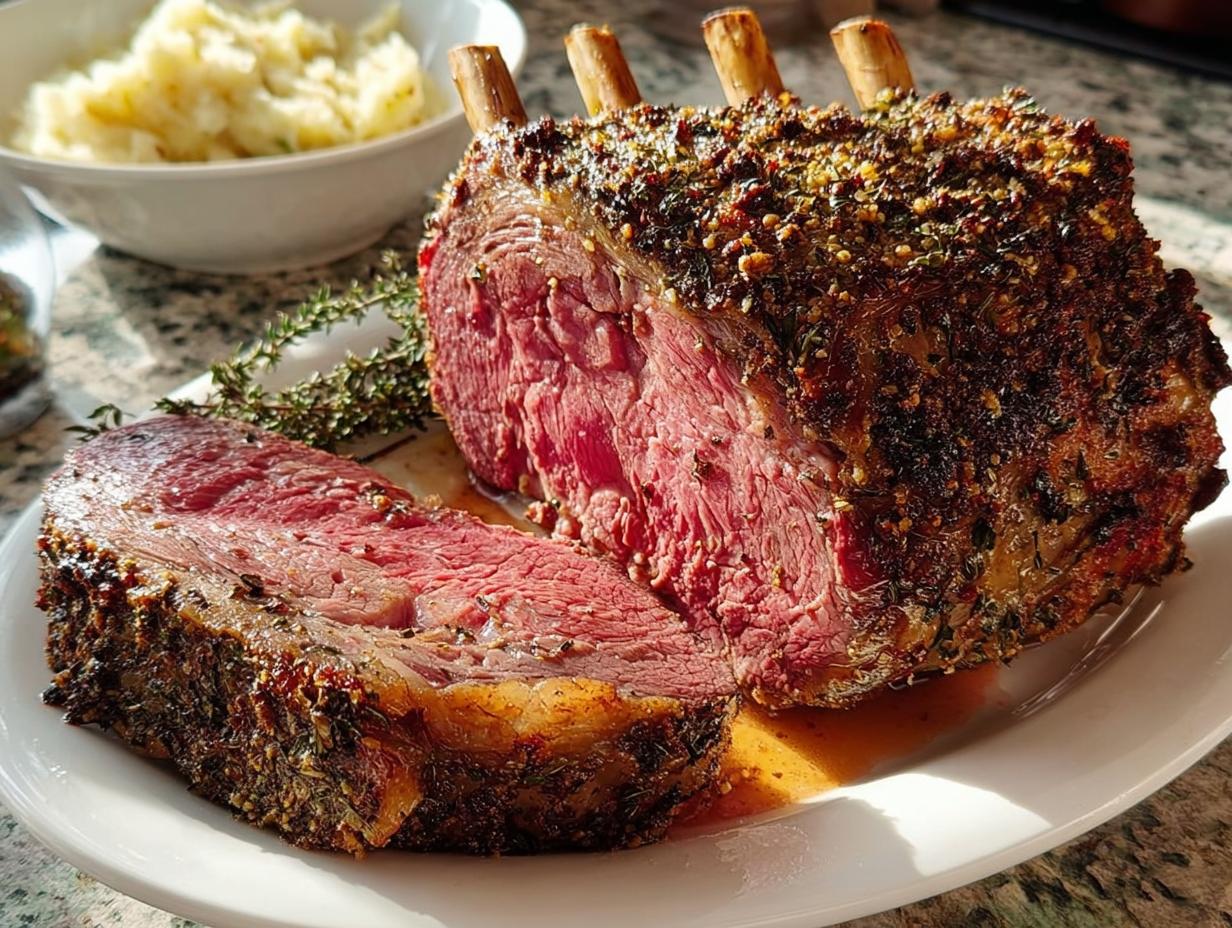
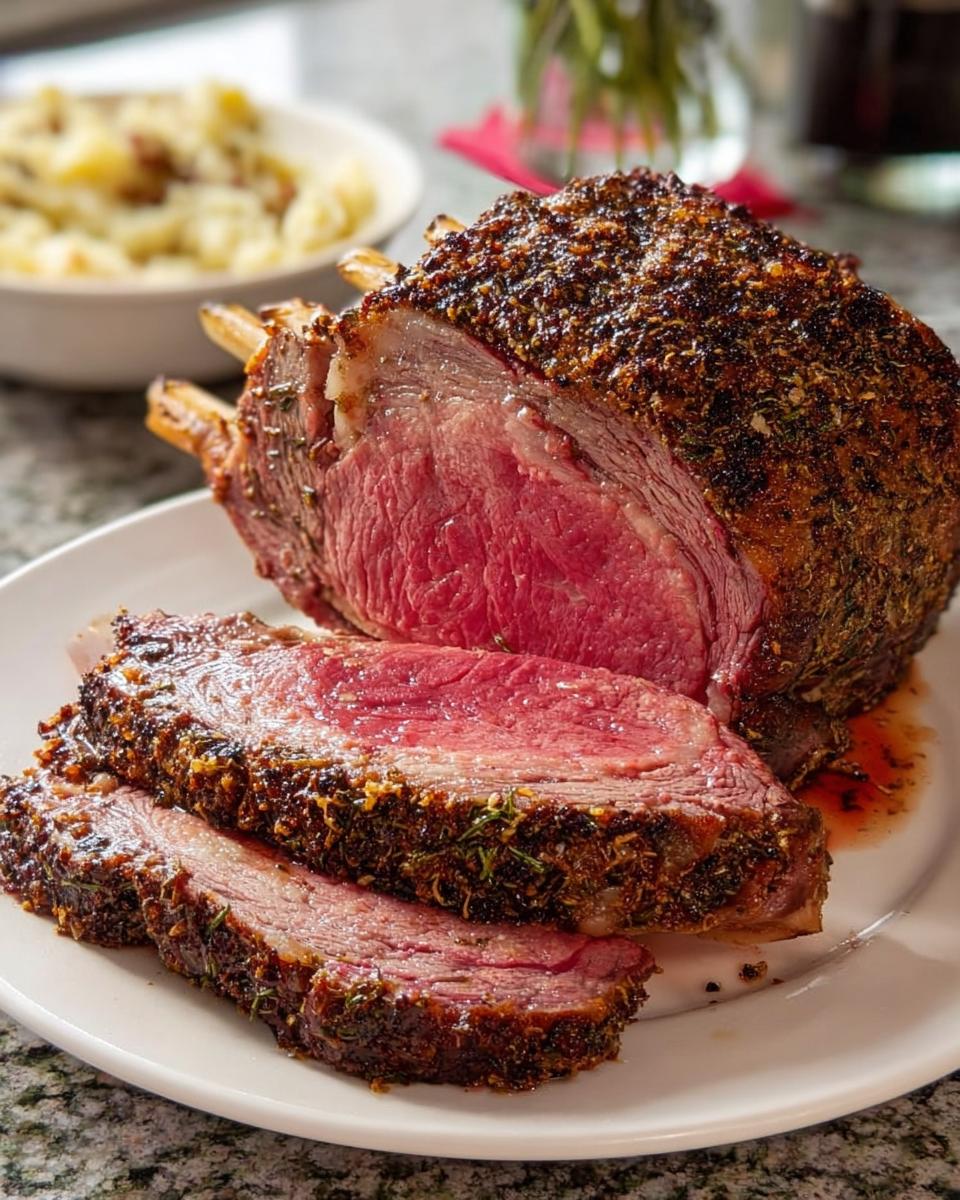
Forget everything you thought you knew about making a roast beef that turns out dry or underwhelming. Seriously, ditch that fear right now! Achieving that incredible, shatteringly crisp crust and an interior that just melts in your mouth—that restaurant-quality experience—is completely within your reach. We’re going to master the technique together for what I proudly call my Prime Rib — Juicy, Tender, Perfect (2025) recipe.
This journey into perfect prime rib really started when I was much younger, watching my grandfather work his magic for our family gatherings. I remember the kitchen being completely dominated by the warm, savory aroma of spices and searing beef. When it was finally my turn to replicate his technique, I was so nervous! But when I pulled that first roast out, golden and glistening, and we carved into the unbelievably tender meat, I knew I had connected with something truly special—a way to share history and love through food.
This recipe isn’t just about following steps; it’s about pulling off that deeply satisfying centerpiece dish that makes everyone go silent for the first bite. Trust me, this is the method that guarantees success!
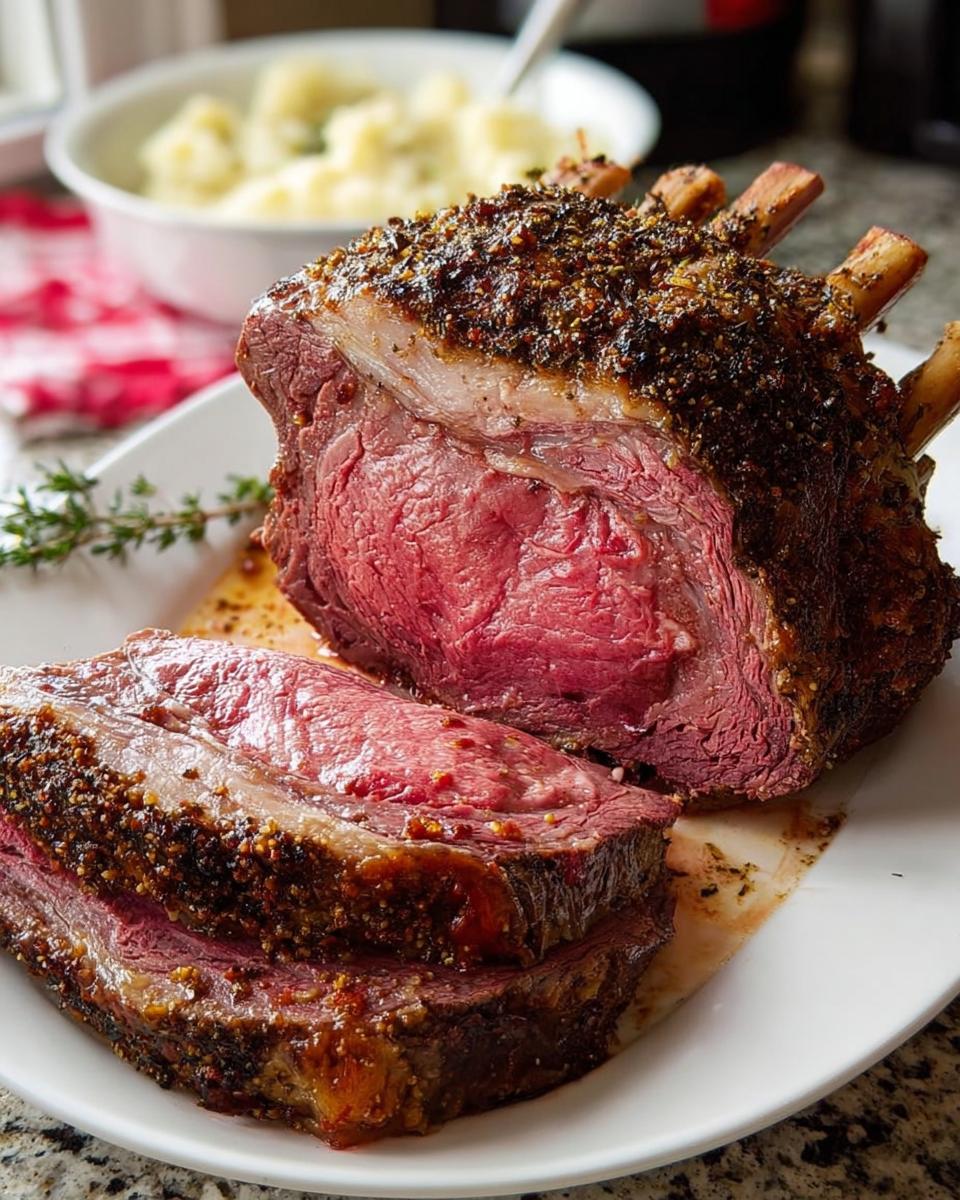
Why You Will Achieve a Prime Rib — Juicy, Tender, Perfect (2025)
I know you’ve probably tried other methods, maybe you’ve pulled your roast out too early or let it sit too long while folks were waiting. Not anymore! Following these steps ensures you get that restaurant-quality result every time, even if you’re cooking for a huge crowd on Christmas. Here’s why this technique guarantees your best prime rib ever:
- The Two-Temperature Secret: We start hot for the crust—that incredible sear—and then drop the heat way down so the inside cooks gently. This prevents that gray, overcooked band right under the surface you often see, giving you edge-to-edge perfection.
- Maximum Flavor Infusion: By cutting the loin in half, we’re exposing more surface area to that amazing herb and pepper rub. That means flavor penetrates deeper, making every slice of this Prime Rib — Juicy, Tender, Perfect (2025) taste ridiculously good.
- No More Guesswork: You absolutely need a good meat thermometer, this dish demands it! But by following the specific temperature timing provided, you remove all the guesswork, ensuring your roast hits that sweet spot between rare and medium-rare consistently.
- Fall-Apart Tender Texture: The combination of the slow roast after the initial blast, coupled with that crucial long resting period, locks all the beautiful moisture right inside the fibers. That’s how you get texture that feels like butter.
Essential Equipment for Your Prime Rib — Juicy, Tender, Perfect (2025)
You don’t need a million gadgets, but for a showstopper like this, you need the right tools. Please, PLEASE don’t try to eyeball the temperature; that’s the moment things go sideways fast!
- You absolutely must have a reliable meat thermometer. I’m serious, it’s non-negotiable if you want juicy results every time.
- A sturdy, heavy-bottomed skillet is necessary for achieving that dark, flavorful sear we want before the oven bath.
- Don’t forget your standard oven, but trust me on the thermometer!
Ingredients for the Ultimate Prime Rib — Juicy, Tender, Perfect (2025)
Okay, let’s talk about what goes into this masterpiece. Since this is a centerpiece event, we can’t skimp, right? The quality of the ingredients—especially the meat itself—makes a huge difference in how juicy it ends up. Check out the list below. I’ve linked where you can learn more about sourcing, because getting the initial cut right is half the battle! You might want to check out my guide on roast beef sourcing.
If you’re buying a large roast like this for the holidays, remember you’re aiming for about 14 pounds total to serve a good crew. Don’t be shy with the salt and herbs, either; we need a lot of seasoning to cover that huge surface!
For the Roast
This is the star of the show, folks. Make sure you talk to your butcher, especially if you are hosting the Prime Rib For Christmas Dinner!
- 1 whole rib eye roast (That’s about 14 lb. total, so make sure you’re getting a nice big one, bone-in or boneless—I love bone-in for extra moisture protection!)
For the Seasoning Rub
You have to prepare these spices fresh; I promise it makes the crust taste incredible. We’re using a generous amount here to really lock in the flavor before it hits that hot oven.
- 6 Tbsp. olive oil (Keep this divided; we use some for searing and some for binding the rub.)
- 4 Tbsp. tri-color peppercorns (These need to be crushed! See the instructions for how I smash them with a rolling pin—it gives you little pockets of pepper heat!)
- 3 sprigs rosemary (Strip those needles right off the woody stems!)
- 3 sprigs thyme (Similarly, just the leaves, please.)
- 1/2 cup kosher salt (This is a lot, but remember, it’s seasoning a massive piece of meat.)
- 1/2 cup minced garlic (Fresh garlic is a game-changer here; don’t use the jarred stuff if you can help it!)
Step-by-Step Instructions to Prepare Prime Rib — Juicy, Tender, Perfect (2025)
This is where the magic happens! Don’t rush these steps, especially the temperature changes—they are the secret sauce to that melt-in-your-mouth texture. You’ll need to make sure your oven is ready to go and you have a reliable thermometer handy. You can read more about oven calibration in my oven temperature guide, but let’s get this roast cooking!
Preparation and Searing: Setting Up for Success
First thing’s first: take that gorgeous prime rib out of the fridge well ahead of time! We need it to relax and come up toward room temperature, so let it sit for at least 30 minutes, maybe even a full hour if it’s really cold. While it’s relaxing, crank your oven up to a blazing 500°F (260°C). That heat is necessary for developing that amazing crust. While that’s heating, grab your peppercorns and put them in a plastic bag—then use a rolling pin to smash them up! We aren’t looking for powder, just nice chunky bits. Also, strip all those fragrant leaves off your rosemary and thyme sprigs.
Next, you’ve got to cut that big loin in half! I know, it feels intense, but cutting it lets the heat penetrate more evenly, which is key for achieving that edge-to-edge cook. Get your heavy skillet screaming hot, add about 2 tablespoons of that olive oil, and sear both halves until they are deep golden brown on all sides. That crust is flavor, honey!
Applying the Rub and Roasting Temperatures
Now that the outside is gorgeous, it’s time for the flavor shield! Mix up your smashed pepper, herbs, salt, and garlic. Drizzle the remaining 4 tablespoons of olive oil all over the meat halves—this helps the rub stick beautifully. Sprinkle that entire spice blend over the whole roast and really pat it in. We want that seasoning locked tight!
Get the roast into that 500°F oven for just 20 to 30 minutes to seal everything in. Then, here’s the crucial pivot: immediately drop the oven down to 300°F (150°C). Keep roasting until your internal thermometer (inserted deep into the thickest part!) reads 125°F (52°C) for that perfect rare to medium-rare finish. This low-and-slow part can take another 30 to 50 minutes, depending on your roast size. If you want it more done, you can go higher, but watch that thermometer like a hawk! If you’re looking for comparisons, check out this lovely recipe from The Pioneer Woman, though I find my two-step temperature method gives a cleaner cook: Pioneer Woman’s Prime Rib.
The Critical Resting Period for Prime Rib — Juicy, Tender, Perfect (2025)
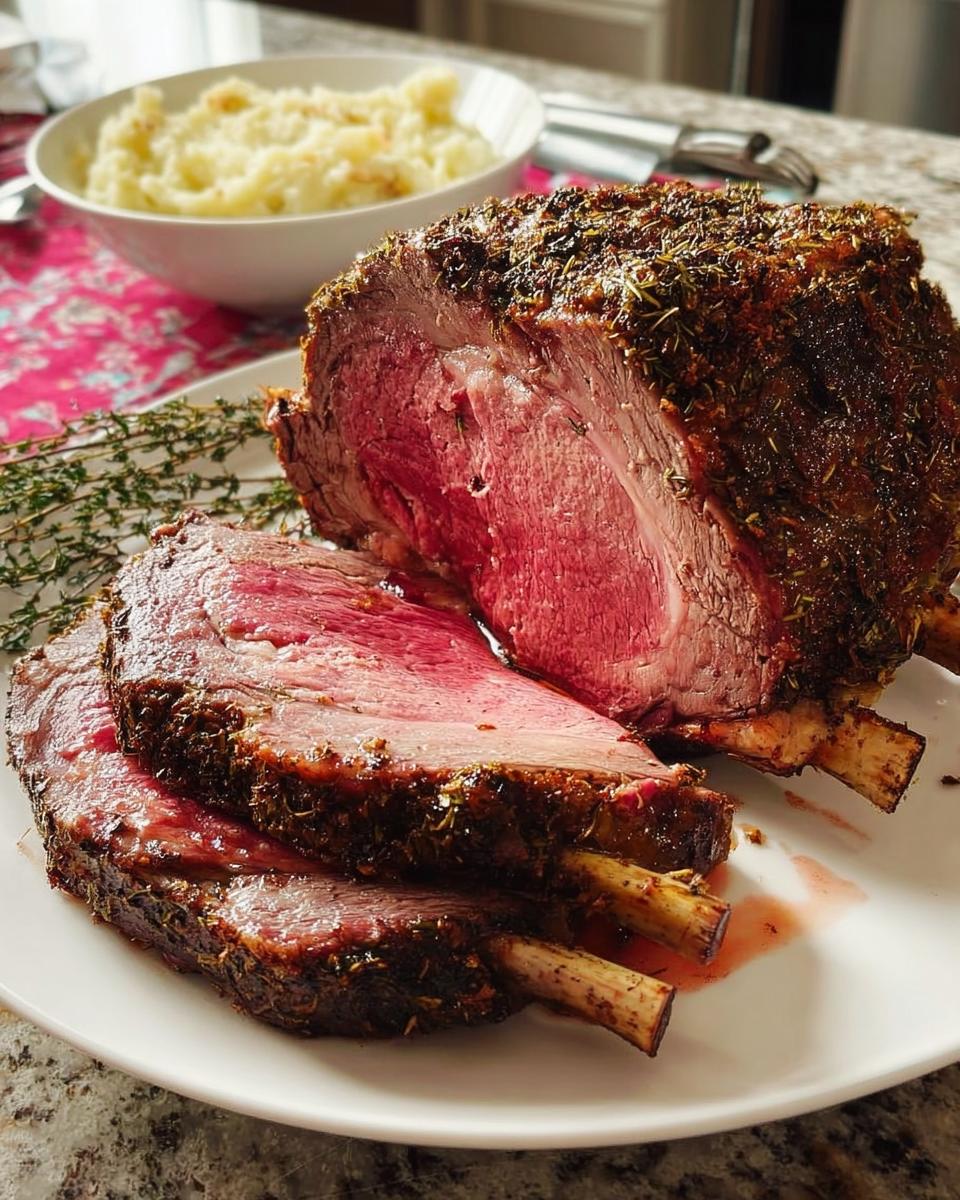
You have successfully roasted the most amazing cut of beef, but if you touch it now, all that hard work runs right out onto your cutting board! You absolutely must let this stand for a minimum of 20 minutes—I usually aim for closer to 30 minutes for a big piece like this. This resting time is non-negotiable because it allows the juices, which have been driven right to the center by the heat, to redistribute back through the muscle fibers. This is the final, ultimate step that ensures every slice of your Prime Rib — Juicy, Tender, Perfect (2025) is unbelievably juicy!
Tips for a Perfect Prime Rib — Juicy, Tender, Perfect (2025)
Okay, now that you’ve seen the basic steps, let me jump in with a few things I’ve learned over the years of making this roast for Christmas dinner. You want that assurance that it’s going to be perfect, right? These little nuggets of wisdom separate the good roasts from the truly legendary ones. If you’re invested in nailing that internal temperature, you absolutely must check out my guide on using your meat thermometer correctly; that tool is your best friend here.
First off, let’s talk about searing again. I know it feels scary to put a giant piece of meat in a 500°F oven, but you cannot skip that initial sear. If your crust isn’t deeply browned and almost crusty before you turn down the heat, you’ve lost the flavor foundation for your perfectly seasoned roast. If your pan isn’t getting hot enough, use less oil! Too much oil lowers the effective temperature, and you end up steaming the outside instead of crusting it.
Never, ever, ever pull the roast out based on time alone. I see people try to guess, especially when they are nervous about serving a huge crowd. But time changes based on your oven calibration, the actual temperature of the meat when it starts, and whether you cut the bone-in or boneless section. A thermometer, used correctly, takes all that anxiety away!
Another thing folks sometimes mess up is salt. You need a lot of kosher salt because it’s pulling moisture out initially and then creating that amazing crust. Don’t be timid! We cure the surface a little before the high-heat blast, which actually helps tenderize the exterior meat fibers. If you’re worried about it being too salty overall, remember that 90% of that pure salt crust is easily scraped off before you carve it, leaving behind only perfect flavor.
Finally, when you take it out at 125°F, that roast isn’t done yet! It’s carrying residual heat, which is why resting is so important. If you slice it immediately, the juices will flood out. If you ignore the resting time, your beautiful, juicy roast is going to dry itself out sitting on the counter. Give it that minimum 20 minutes—you can use that time to make your amazing gravy or whip up your favorite sides. That patient pause is truly the final piece of achieving that Prime Rib — Juicy, Tender, Perfect (2025).
Ingredient Notes and Substitutions for Your Roast
When you’re dealing with a star player like prime rib, substitutions can feel scary, right? I totally get it. This isn’t the recipe where you swap out one ingredient for another without thinking. Because this cut is so rich, the quality of the supporting players—your salt, your herbs—really shines through. My philosophy is: if you have to substitute, stick close to the original flavor profile, and never compromise on freshness!
Let’s talk about salt first. I insisted on kosher salt in the recipe, and I really stick by that. Table salt has a different density and can actually make your crust taste aggressively salty because the grains dissolve too easily into the meat juices. If you absolutely cannot find kosher salt, use sea salt, but measure slightly less than what the recipe calls for, maybe shave off about 1/4 cup, and taste as you go with the rest.
Fresh Herbs vs. Dried
This is probably the most common substitution question I get. Can you use dried thyme or rosemary? Yes, but you have to adjust because dried herbs are much more concentrated than fresh.
For the dried version, just use about one-third of the fresh amount listed. For example, if the recipe calls for 3 sprigs of fresh rosemary, you’d use about 1 tablespoon of dried, crumbled rosemary leaves instead. I’d personally avoid dried herbs for the crust if I could help it, though. Fresh herbs blister slightly and release their oils beautifully when seared; dried herbs tend to just turn brittle and slightly dusty. If you’re making this for a big holiday like Christmas, hunt down some fresh sprigs—it’s worth it!
Olive Oil Considerations
We use olive oil here both to mix the rub and briefly for that high-heat sear. Can you use another oil? Sure, but be mindful of the smoke point. I specified olive oil because it’s hearty, but if you’re worried about it burning during the initial 500°F blast, feel free to swap those initial 2 tablespoons out for a high-heat oil like avocado oil. Keep the remaining 4 tablespoons near the end as olive oil (or use the avocado oil for all 6 Tbsp. if you are nervous!). Don’t use virgin olive oil in the initial sear, though; it has too low of a smoke point and will taste bitter before your roast even gets brown enough!
Ultimately, for a dish destined to be the showstopper of your meal, treating your ingredients—especially the seasoning—with this level of detail is what takes you from “good roast” to a legitimately Prime Rib — Juicy, Tender, Perfect (2025) experience.
Serving Suggestions for Your Christmas Prime Rib Dinner
Now that you’ve mastered getting that incredible roast out of the oven—golden, tender, and ready to slice—the next big question is: What are you serving with it? You’ve done the heavy lifting to create the ultimate centerpiece for your Prime Rib For Christmas Dinner, so the sides need to be excellent but they also need to balance that richness. We don’t want everything heavy running together, do we?
When I plan out my holiday menu, I always look for things that offer brightness, acidity, or a creamy contrast to the deep, savory flavor of the beef. I try to pick sides that allow the prime rib flavor to really shine rather than fighting against it! You can find tons of amazing ideas over in my collection of favorite side dish recipes, but here are my go-to pairings that I serve without fail.
A rich, perfectly cooked roast beef needs sides that cut through the fat and refresh the palate. Think about texture contrasts, too—we want creamy mashed potatoes alongside something with a little snap!
- Sharp Horseradish Sauce: This isn’t a side dish, but it’s mandatory! A homemade sauce with fresh grated horseradish gives you that instant, sinus-clearing counterpoint to the richness of the beef fat. It’s essential.
- Creamy Gruyère Potatoes: Skip plain mashed potatoes and go for something layered and cheesy, like a creamy gratin or pommes Anna. The earthy Gruyère melts beautifully and complements the savory seasoning on the roast.
- Roasted Brussels Sprouts with Bacon and Balsamic: The slight char and bitterness from the roasted sprouts, combined with the smoky bacon, adds a necessary earthy, slightly acidic note. Don’t skip the balsamic drizzle—that glaze is what balances the richness of the meat.
- Green Beans Almondine: Something green is always welcome! Keeping the green beans lightly crisp—not overcooked and mushy—with toasted almonds and a squeeze of lemon keeps the plate feeling fresh and lively.
- Yorkshire Puddings: If you’re going for full tradition, you can’t beat a properly puffed Yorkshire pudding. They are fantastic for soaking up any of those delicious pan drippings left over from carving time.
Honestly, if you nail the roast, the sides just slot into place. Focus on fresh flavors that complement the beef, and you’ll have people talking about your Prime Rib — Juicy, Tender, Perfect (2025) long after the leftovers are gone!
Storing and Reheating Leftover Prime Rib — Juicy, Tender, Perfect (2025)
Isn’t it the best when you have leftovers from a roast this incredible? It means we get to relive the glory of your perfectly cooked prime rib the next day! But you have to treat leftovers right, especially with such a fantastic cut of meat. We want to keep that incredible tenderness locked in, not turn it into tough, dry sandwich meat, right?
When it comes to storing what remains of your Prime Rib — Juicy, Tender, Perfect (2025), speed is your friend. Don’t let that roast sit out all night while you’re cleaning up. Get it wrapped up as soon as it’s cooled down significantly, but definitely wait until it’s not piping hot.
Storing Your Leftover Prime Rib
The key to good leftovers is moisture protection. You need to wrap it tightly to stop it from drying out in the fridge. I always recommend slicing off the larger pieces you think you’ll eat in the next day or two, leaving large chunks whole if you plan on keeping them longer.
- Wrap it Tight: Wrap the meat tightly first in plastic wrap, making sure you squeeze out any air pockets. Then, put that plastic-wrapped section into a zip-top freezer bag or an airtight container. This double layer is crucial for fighting off the refrigerator’s drying effects.
- Refrigeration Window: Properly stored prime rib will keep beautifully in the refrigerator for about three to four days. Any longer than that, and I start worrying about quality degradation, even though the USDA might say five days is fine. For the best steak experience, eat it within 48 hours!
- Freezing for Later: If you know you won’t get to it quickly, freezing is an option! Slice the leftover prime rib thinly against the grain before freezing. Store these slices in freezer bags, again, squeezing out all the air. Frozen prime rib is great for up to three months.
Reheating for Maximum Tenderness
This is where most people mess up! You cannot just throw a slice of perfectly cooked prime rib into the microwave naked on a plate—that’s a guaranteed path to shoe leather texture. We need gentle, moist heat to bring it back to life without cooking it further.
If you are reheating individual slices, my absolute favorite trick is the stovetop simmer. You don’t want to boil these precious slices, just gently warm them through!
- Make a Quick Au Jus (or find drippings): Even if you didn’t save the pan juices, mix a little low-sodium beef or chicken broth with a tiny splash of water and heat it gently on the stove until it steams.
- Low and Slow Warm-Up: Place your slices into a skillet that has just a whisper of this warm liquid on the bottom. Keep the heat on low—I mean the lowest setting your stove goes! Cover the skillet immediately.
- Just a Quick Touch: Let them warm through slowly, maybe three to five minutes, turning once. The liquid creates steam around the meat inside the covered skillet, preventing them from drying out while they heat up. As soon as they are warmed through and steamy, take them off the heat!
If you are reheating a larger chunk you want to carve again, the oven is better, but you have to create a humid environment. Place the roast in a shallow oven-safe dish, add a quarter-inch of broth to the bottom, cover the whole thing very tightly with foil, and heat at just 275°F (135°C). Use that meat thermometer again! Pull it when it hits about 120°F (49°C) internally. This takes patience, but you’ll keep that gorgeous, juicy center your hard work produced!
Frequently Asked Questions About Prime Ribs Recipe
I always get so many questions after people try making a roast this impressive! It’s natural to be nervous when you’re dealing with such an expensive cut of meat, especially when hosting something big like the Christmas Rib Roast. Don’t worry, these are the most common things folks ask me, and I’m happy to clear everything up so you can focus on that beautifully seasoned crust.
What internal temperature is best for a Prime Ribs Recipe?
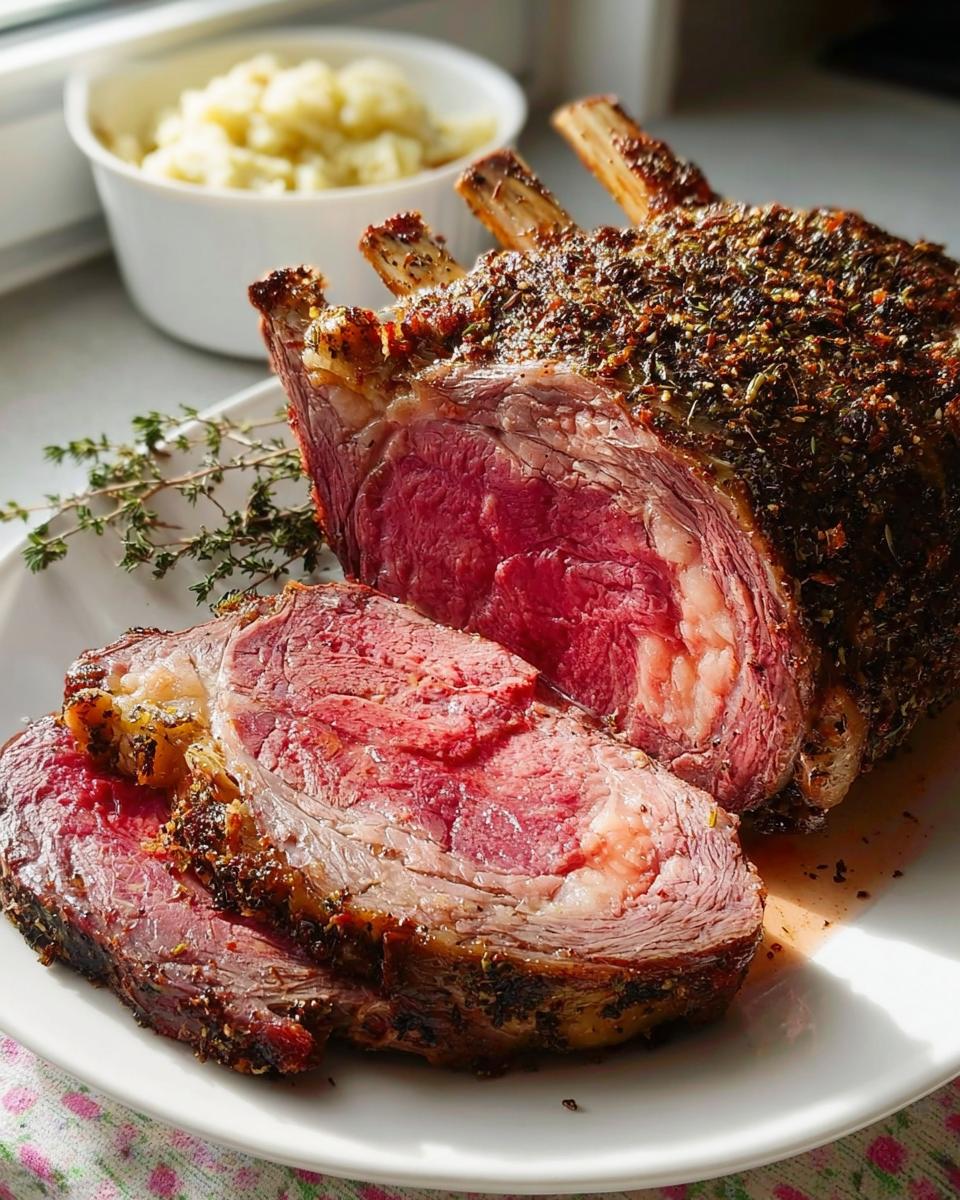
This question comes up constantly, and honestly, it’s why my recipe focuses so much on the meat thermometer. For what most of us consider the *perfect* texture—that juicy, tender bite that isn’t quite rare but isn’t cooked through—you want to pull it between 125°F and 130°F (52°C to 54°C). That’s what I aim for when making my Prime Rib — Juicy, Tender, Perfect (2025).
Remember, the temperature will rise another five degrees while it rests! If you want it definitely medium, you’ll want to pull it closer to 130°F from the oven, knowing it will hit about 135°F resting. If you pull it out when it’s already at your final desired temp, you’ve overcooked it by the time you take the first slice. Trust the thermometer, not the clock!
Can I skip searing when making a Christmas Rib Roast?
Oh, absolutely not! If you skip searing, you are skipping the best part of that entire roast—the outer flavor layer! Searing, that initial blast at 500°F, is what creates that dark, mahogany crust we associate with amazing restaurant beef. That’s where all the maillard reaction magic happens.
When you sear, you are developing chemical compounds that give the exterior its deep, savory, almost nutty flavor. If you just roast it slowly from the start, you end up with a perfectly cooked interior, sure, but the outside will be pale gray and bland. You won’t have that wonderful contrast in texture or flavor that makes a Prime Rib — Juicy, Tender, Perfect (2025) so satisfying. It’s non-negotiable for getting that perfect bark!
How To Season Prime Rib if I want more herbs?
I get it, sometimes you just want that really intense herb flavor! The recipe uses a half-cup of mixed fresh herbs, which is quite a bit, but you can certainly bump it up if you love rosemary. If you want to amp up the herbal intensity for your Christmas Rib Roast, I suggest increasing the rosemary and thyme by another 50%—but only if the herbs are super fresh. If you add too many dried herbs, the crust can get overwhelmingly bitter or dusty, which defeats the purpose of a perfect seasoning!
Estimated Nutritional Data for Prime Rib — Juicy, Tender, Perfect (2025)
So, we’ve created this incredible, show-stopping centerpiece. Naturally, as we gather around the table for our magnificent Prime Rib — Juicy, Tender, Perfect (2025), people often wonder what they are actually eating, calorie-wise. I always get a bit nervous about posting this stuff because, let’s be real, this is rich food! We roast a massive, beautiful cut of beef because it’s a celebration, not an everyday meal, right?
I’ve based these numbers on the sheer weight of the roast, divided by the generous 14 servings we planned for. But here’s my promise to you: these figures are just estimates. If you buy a leaner rib roast, or trim a little more visible fat off before you sear it, your numbers will definitely change!
Think of this as a fun guideline, not a strict nutritional breakdown, because the absolute joy of roasting a Rib Roast like this is letting go of the everyday rules for a glorious holiday moment!
- Estimated Calories Per Serving: Around 450 – 550 Calories
- Estimated Fat Per Serving: This is where the richness comes from! Expect around 30 – 40 grams.
- Estimated Protein Per Serving: Since this is pure beef, the protein is fantastic, sitting near 40 grams.
- Estimated Carbohydrates Per Serving: Practically zero! We used salt, oil, and herbs, so carbs are negligible here.
Remember, these figures change based on how much fat drips off during the cooking process or how much delicious sauce you pour over it later (shhh, I won’t tell!). So enjoy this magnificent meal responsibly—you earned it!
Share Your Perfect Prime Rib — Juicy, Tender, Perfect (2025) Experience
Seriously, I want to hear all about it! I put my heart and soul into perfecting this technique so you wouldn’t have to stress over your big holiday meal, and now I just can’t wait to see what you create in your own kitchen. Did you get that gorgeous, dark crust I told you about? Did your family groan with delight when you carved into the middle?
Making a showstopper like this Prime Rib — Juicy, Tender, Perfect (2025) should be a shared moment, so please don’t keep your success a secret! Take a picture of that glorious slice showing the perfect pink center and tag me on social media—I seriously live for seeing your results.
When you get a chance, come back here and leave a little star rating, too. It helps other home cooks who are staring down their first big roast get the confidence they need to try this method. Did you nail the two-temperature timing? Did you crush those peppercorns just right?
Your feedback is what helps keep this recipe alive and thriving! Let me know in the comments below how your Prime Ribs Recipe turned out. I’m already excited to read your stories about your incredible Christmas Rib Roast!
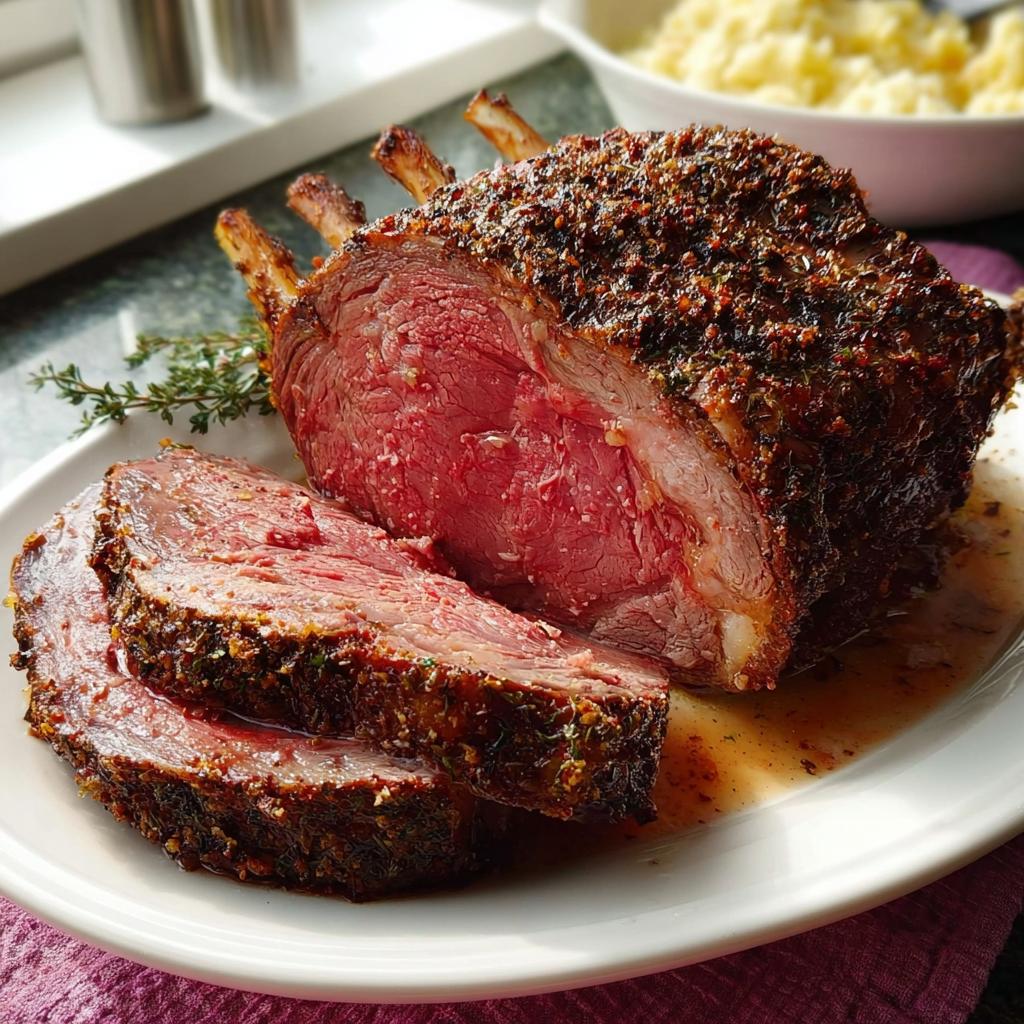
Prime Rib — Juicy, Tender, Perfect (2025)
Ingredients
Equipment
Method
- Preheat your oven to 500°F (260°C). Take the prime rib out of the refrigerator and let it sit at room temperature for 30 minutes to 1 hour.
- Cut the rib loin in half. You will roast the halves separately for more controlled and even cooking.
- Heat a large, heavy-bottomed skillet over very high heat. Add 2 tablespoons of olive oil and sear both halves of the roast until they have a nice dark golden color. Place the peppercorns into a bag and crush them with a rolling pin. Strip the leaves from the rosemary and thyme sprigs. In a bowl, mix the kosher salt, crushed peppercorns, rosemary leaves, thyme leaves, and minced garlic.
- Pour the remaining 4 tablespoons of olive oil over the rib loin halves. Sprinkle the rub mixture evenly over the meat and pat it slightly to help it stick. Place the roast in the preheated oven and cook for 20 to 30 minutes. Then, reduce the oven temperature to 300°F (150°C). Continue roasting until a meat thermometer inserted into the thickest part registers 125°F (52°C) for rare to medium-rare. This will take approximately 30 to 50 minutes. The roast will continue to cook slightly after you remove it from the oven. If you prefer your meat more cooked, leave it in the oven longer, but monitor the temperature closely to avoid cooking past medium-rare.
- Remove the prime rib from the oven and let it rest for at least 20 minutes before slicing.
Notes
Tried this recipe?
Let us know how it was!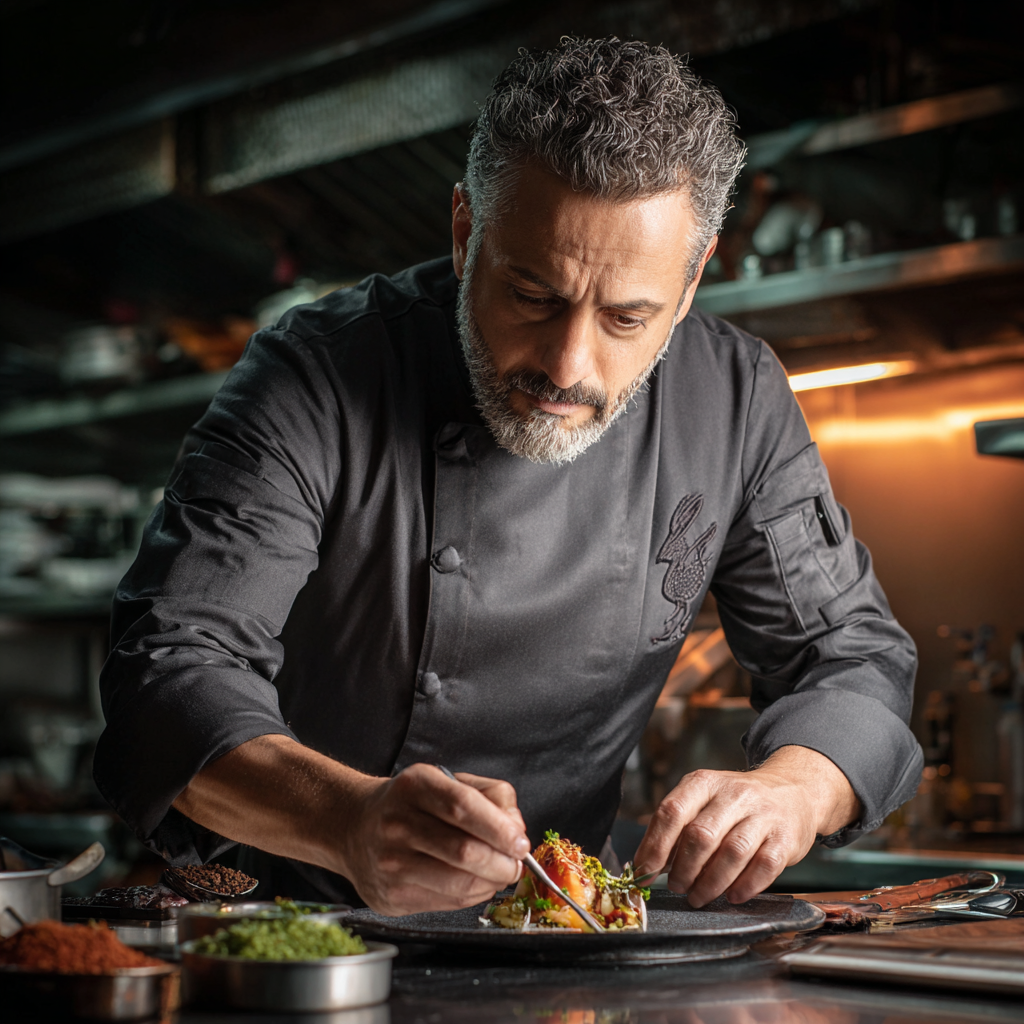
Master of Global Fusion Innovation
My culinary adventure reflects my Lebanese-Italian heritage and a decade spent in the dynamic fusion restaurant scenes of Miami and Barcelona. I’ve made it my mission to prove that beloved global comfort foods can be successfully adapted for low-carb living without losing their soul, their cultural authenticity, or their ability to comfort.
With advanced training in molecular gastronomy and experience spanning Mediterranean, Middle Eastern, and Latin American traditions, I’ve developed what I call “respectful innovation” – culinary creativity that honors traditional cooking wisdom rather than replacing it. My alternative ingredient substitution systems are now taught in specialty diet cooking schools throughout the region.
Drawing from my trilingual upbringing, I understand how deeply food connects to identity and memory. That’s why my flavor-bridging techniques allow classic dishes from around the world to maintain their comforting, familiar qualities while meeting contemporary nutritional standards. I regularly share these techniques at international culinary symposiums and innovation events.
When I’m not experimenting in my Miami fusion kitchen laboratory, you’ll find me at local salsa dance venues – the rhythm and improvisation skills translate directly to my creative cooking process! My role as a foster parent to rescue rabbits has unexpectedly inspired some of my most creative plant-based low-carb innovations.
My personal low-carb journey began as a way to maintain energy for my active lifestyle, but it’s evolved into a professional mission of proving that healthy eating can be globally adventurous rather than restrictively limiting. Every recipe I create is a passport to culinary adventure, transforming kitchens into laboratories for exploring healthy versions of the world’s most beloved comfort foods.