
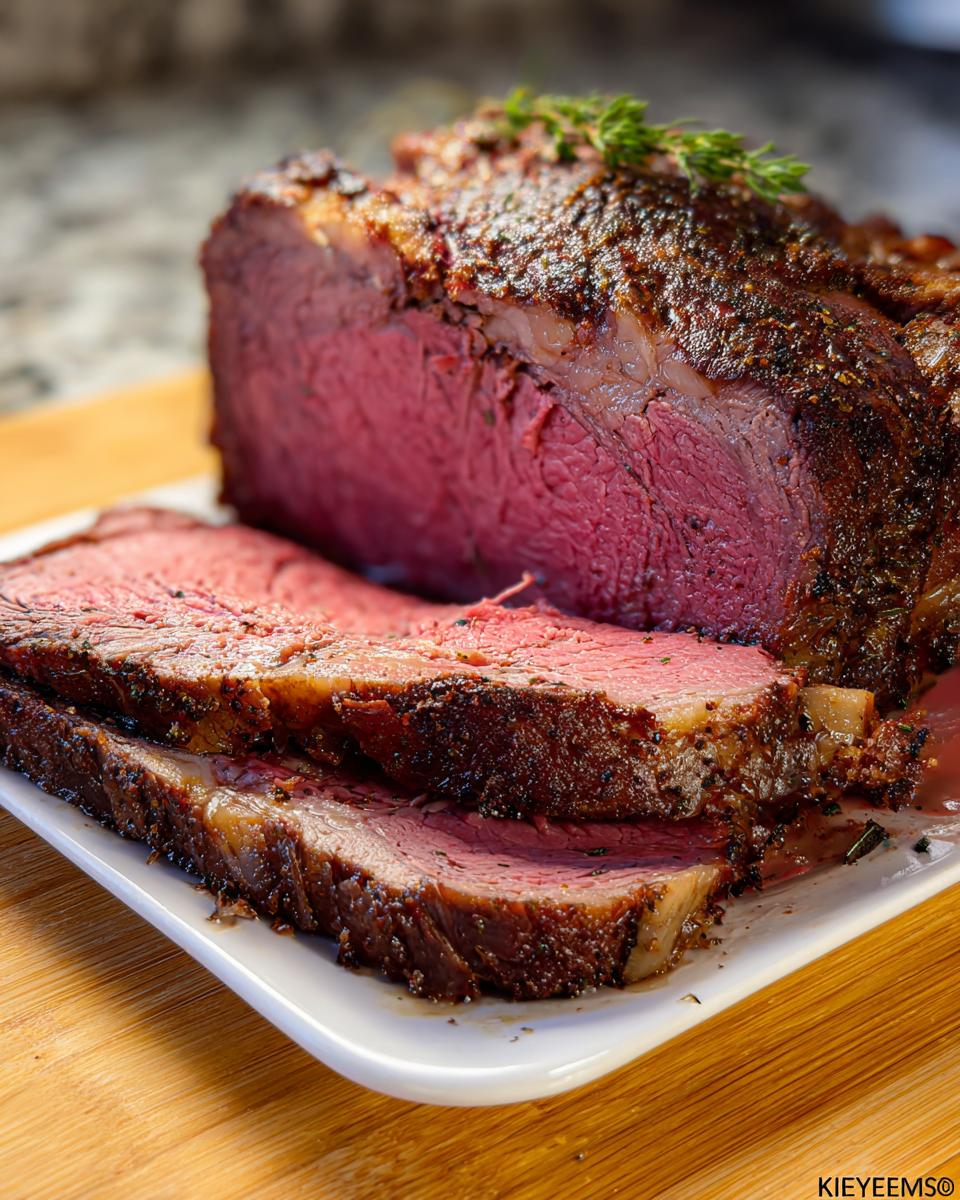
Who says that incredible, melt-in-your-mouth, perfectly crusted roast is only for fancy steakhouses? I used to think so too, but I learned that you absolutely can achieve that show-stopping, restaurant-quality experience right here in your own kitchen. I still remember the first time I prepared a **Boneless Prime Rib — Restaurant-Quality at Home** for a big holiday feast. With my Lebanese-Italian heritage bubbling up, I wanted something truly special.
Watching that beautiful roast slowly transform in the oven brought such comfort—it felt like weaving all our traditions together right on my dining table. When my family’s faces lit up after that first bite, I knew that special magic was worth sharing. I’m Simo Mimo, and I want to walk you through every single secret step so you can create unforgettable, luxurious meals with minimal fuss!
Why This Boneless Prime Rib — Restaurant-Quality at Home Recipe Works (E-E-A-T)
This isn’t just any recipe; it’s a method built on precision, which is why you get that steakhouse texture every time. We are cutting corners on prep time, not on technique. When you follow these key principles, you’re guaranteeing success!
- The secret lies in respecting the meat and the temperature—it’s all about controlled cooking.
- We let the spices work deep into the meat, turning a simple roast into something truly intense flavor-wise.
- My background taught me that the best results often come from slow, thoughtful processes.
The Power of the Dry Brine and Marinating Time for Boneless Prime Rib — Restaurant-Quality at Home
You absolutely must let this roast spend time chilling uncovered in the fridge overnight, aiming for 6 to 24 hours. We call this the dry brine! Trust me, this step is non-negotiable for those cooking techniques for prime rib that make the outside brown beautifully. When you pat that meat bone-dry before seasoning, you are setting up a surface ready to create the most incredible, flavorful crust when it finally hits the heat.
Low and Slow Cooking Techniques For Prime Rib
Forget blasting the oven hot right away! We start super gentle, way down at 275°F. This low temperature cooks the roast evenly from edge to edge, so you don’t end up with a grey band of overcooked meat underneath that gorgeous crust. This is where your oven-safe meat thermometer earns its keep. You have to trust the thermometer over the clock when aiming for that perfect internal temp before the final sear.
Gathering Ingredients for Your Boneless Prime Rib — Restaurant-Quality at Home
Okay, let’s talk about what you need. Part of achieving that restaurant-quality flavor is using the right building blocks. Don’t skimp here; the quality of the roast and the spice blend truly make this a spectacular **Boneless Prime Rib — Restaurant-Quality at Home** experience. For a 6-pound roast that feeds about 10 people, here’s what you’ll need!
The preparation notes right on the ingredient list might look fussy, but they are truly what separates ‘good’ from ‘amazing.’ Take the salt, for example—you have to sprinkle it from way up high! It sounds weird, but I promise it helps everything coat evenly.
For the Spice Rub: Best Seasonings For Boneless Prime Rib
This rub is magic, seriously. Get your herbs ready! Here’s the **Best Seasonings For Boneless Prime Rib** required to make that crust sing.
- Kosher salt: You need 1 full Tablespoon. Remember, hold that salt shaker about six inches above the roast when sprinkling!
- Dried rosemary: Use 2 teaspoons, but crush them up slightly with the back of a spoon before mixing.
- Dried thyme leaves: Just 1 1/2 teaspoons.
- Coarse black pepper: 1 1/2 teaspoons. Please, use freshly ground if you can!
- Garlic powder: 1 1/2 teaspoons.
- Paprika: Just a half teaspoon will give it a gorgeous color.
Once you have all these glorious spices together, you can check out my guide on elevating your herb selections for any roast!
Essential Items For Cooking the Prime Rib
These are just the supporting cast members, but they are important for keeping things moist in the pan during the lengthy low-and-slow cook.
- Beef broth: Bring 1 cup of good beef broth (or water in a pinch) to sit in the bottom of the roasting pan. This helps keep the environment humid.
- And of course, get your 6-pound boneless prime rib roast ready! If yours is bigger, just hang on, we’ll talk about scaling soon enough!
Step-by-Step Guide: How To Make Restaurant-Quality Prime Rib
This is where the magic happens! Honestly, this whole process is actually incredibly easy, offering maximum reward for that **Minimal Prep** time you put in the day before. We’re breaking this down into two main stages: getting the flavor on, and then cooking it perfectly. Follow these steps exactly, and I promise you’ll serve up legendary results.
Preparation: Drying and Seasoning Your Boneless Prime Rib — Restaurant-Quality at Home
Remember, you want dry meat for a dry crust. Grab plenty of paper towels and pat down every single surface of that beautiful roast until it feels totally dry. Now, take the kosher salt and sprinkle it evenly across the whole thing, holding your hand high up—about six inches—so it catches all surfaces like snow!
Next, combine your rosemary, thyme, pepper, and paprika in a little bowl, crushing that rosemary as you go. Rub this mixture lovingly all over the meat. Once seasoned, wrap it up tight, twice over, in plastic wrap. Stick it on a plate and into the fridge for at least 6 hours, but overnight is best for developing deep flavors for your **Boneless Prime Rib — Restaurant-Quality at Home**.
The Two-Stage Roasting Method for Perfect Doneness
When you are ready to cook, preheat your oven low and slow to 275°F. Place your roast on a trivet over some beef broth in your pan. Insert that meat thermometer right into the thickest part, making sure it’s not hitting the pan bottom or any bone (since this is boneless!).
Roast gently until the internal temperature hits 125°F for that ideal medium-rare—this might take around 2 hours 25 minutes for a 6-pound roast, but keep watching that thermometer!
Now, for the crucial part! Pull the roast out, tent it loosely with foil, and let it rest for almost 20 minutes while you crank the oven way up to 450°F. Resting lets the juices settle—don’t skip it! After the rest, the internal temp should climb to 130°F–135°F. Then, pop it back in for just 5 to 8 minutes. This blast of high heat creates that signature crust we love, nailing the **Cooking Techniques For Prime Rib**.
Once done, get it out, slice it up against the grain, and be sure to save those drippings to whip up some amazing Au Jus; you can find my favorite instructions right here! For more visual guidance on perfect roasting, check out this external resource on roast cooking.

Equipment Needed for Boneless Prime Rib — Restaurant-Quality at Home
You don’t need a whole professional kitchen to make this spectacular! But a few specific tools really nail that restaurant-quality result for your **Boneless Prime Rib — Restaurant-Quality at Home**. Precision is everything when dealing with large cuts of meat, so don’t skip these essentials.
First up, you absolutely need an oven-safe meat thermometer. This is your lifeline! It tells you exactly when to pull the roast before resting. You’ll also need a good roasting pan set up with a wire trivet. The trivet ensures hot air circulates underneath the meat—no soggy bottoms allowed!
Finally, make sure you have plenty of paper towels for drying the roast—that’s way more important than you think! And, of course, a sharp carving knife is key for serving it up beautifully when it’s all done.
Ingredient Notes and Substitutions for Your Holiday Roast
Even though we are aiming for that high-end feel, knowing a few substitution tips makes this **Holiday Roast** accessible for any kitchen. The cut of meat itself is the star, right? You absolutely need that beautiful boneless prime rib roast. If your butcher only has bone-in, don’t panic! Just ask them to remove the bones for you. If you cook a bone-in roast, expect the cooking time to increase a bit because the bone insulates the meat some.
What about the broth in the pan? I generally use a nice, low-sodium beef broth because those drippings are gold for making gravy later. But if you don’t have broth, water works just fine, although it won’t add as much depth of flavor to the bottom of the pan. And for the herbs? Fresh is always better if you can swing it, but try to crush the dried herbs before you mix them in—it releases so much more of that wonderful rosemary and thyme flavor!
Achieving Perfect Results When Making Prime Rib For A Crowd
This recipe starts with a 6-pound roast, which easily serves 10 people, making it perfect for a big gathering. If you’re facing a huge dinner party—maybe feeding 15 or 20 folks—scaling this recipe for **Prime Rib For A Crowd** is simple! You just need to stick to the same rules regarding temperature, but remember that the cooking time will increase quite a bit.
For a much larger roast, say 10 pounds or more, you might need 3 to 4 hours just for the low-and-slow part. The key when scaling up is always relying on that thermometer! Don’t guess about the size; check the temperature in the thickest part. You’ll still follow the two-stage method: cook low until you hit 125°F, rest, blast hot for the crust. This method is foolproof, even when you’re cooking a centerpiece this grand for **Boneless Prime Rib — Restaurant-Quality at Home**!
Storage and Serving Suggestions for Your Roast
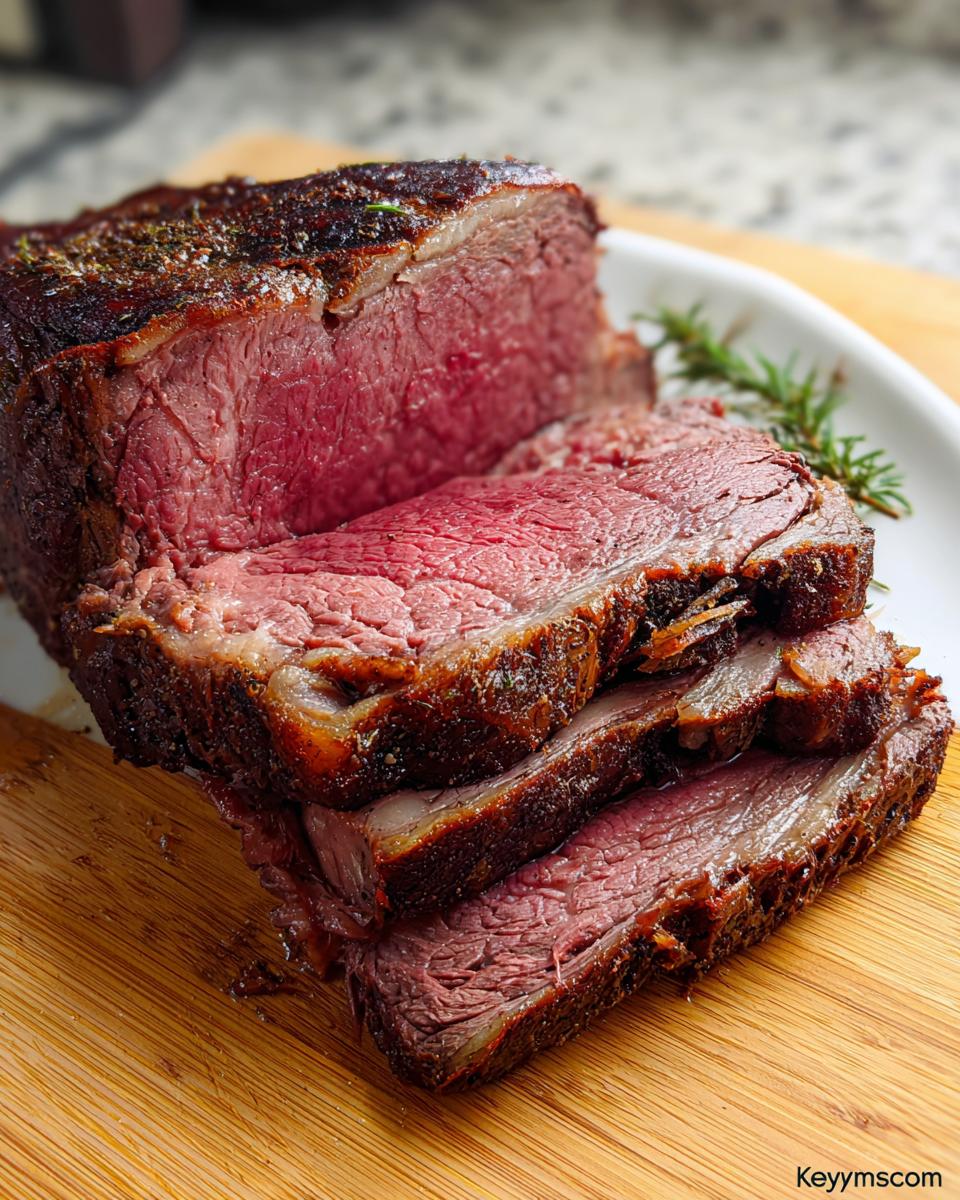
Even after you’ve devoured the last perfectly pink slice, the magic doesn’t have to end! Leftovers from a beautiful **Holiday Roast** like this are truly delicious, but you have to treat them right so they don’t dry out when you reheat them.
When storing leftovers, slice the meat thinly against the grain first, if you haven’t already. Pop those slices into an airtight container. You can keep them covered in the fridge for about three to four days. Now, for reheating—this is key: NEVER microwave a whole slice if you want it tender! The best way is to reheat slices quickly in a thin layer of warm beef broth on the stovetop over medium-low heat, just until they warm through. That little bit of liquid keeps them tasting juicy.
As for serving, my family always demands rich, creamy mashed potatoes, but you can’t really go wrong with robust sides after such a feast. Since this roast creates amazing drippings, you should consider making a classic Yorkshire pudding right in the hot drippings—it’s always a crowd-pleaser! If you need more ideas for what to serve alongside your roast, I’ve put together a list of my favorite recipes that pair perfectly.
Frequently Asked Questions About Cooking Prime Rib
It’s totally normal to have questions when you’re tackling a big cut of beef like this! Preparing a **Holiday Roast** for **Prime Rib For A Crowd** can feel daunting, but once you nail down the timing, you’ll be cooking prime rib like a pro every time you have company.
What temperature should I pull the roast at for medium-rare?
This is the most important question, and you have to understand the two different temperatures! For medium-rare, you must pull the roast out of the oven when the thermometer reads 125°F during the low-and-slow cooking stage. Seriously, pull it then!
Why? Because that roast is going to carry overcook while it rests under the foil, maybe gaining another 5 to 7 degrees. THEN, after you let it rest for that 15 to 20 minutes, you hit it with the high heat (450°F) for that quick sear. By the time you slice into it, the center will have settled perfectly into that rosy 130–135°F medium-rare zone. Trust me on the pull temp!
Can I use a Make Ahead Plan for this recipe?
Oh, you absolutely can! The best **Make Ahead Plan** for this whole process involves the seasoning! As I mentioned, the dry brine—where you liberally salt and season the meat and let it sit uncovered in the fridge—is the perfect thing to do the day before. It dries out the exterior for a better crust and lets the salt penetrate deep into the meat fibers.
I usually prep the seasoning on Thanksgiving Eve and let it chill until Thanksgiving Day before I even think about turning on the oven. It cuts down on the chaos the day of the big meal, which is always a win when you’re hosting a **Prime Rib For A Crowd**!
How do I prevent the outside from burning during the final sear?
That final blast of heat at 450°F is fantastic for developing that deep, savory crust—it’s what gives you that restaurant-quality feel! But if you try to sear it right away, all those juices you worked so hard to keep inside will rush right out, and the exterior will be tough. The secret here is the rest period between the low cook and the high sear.
That crucial 15 to 20 minutes of resting, tented loosely with foil, allows the internal temperature to stabilize and the juices to redistribute. After that rest, the surface is ready to crisp up fast without overcooking the interior. You only need about 5 to 8 minutes at that high heat. If you skip that rest, you risk drying out the edges while waiting for that crust to form!
Nutritional Estimate for This Holiday Roast
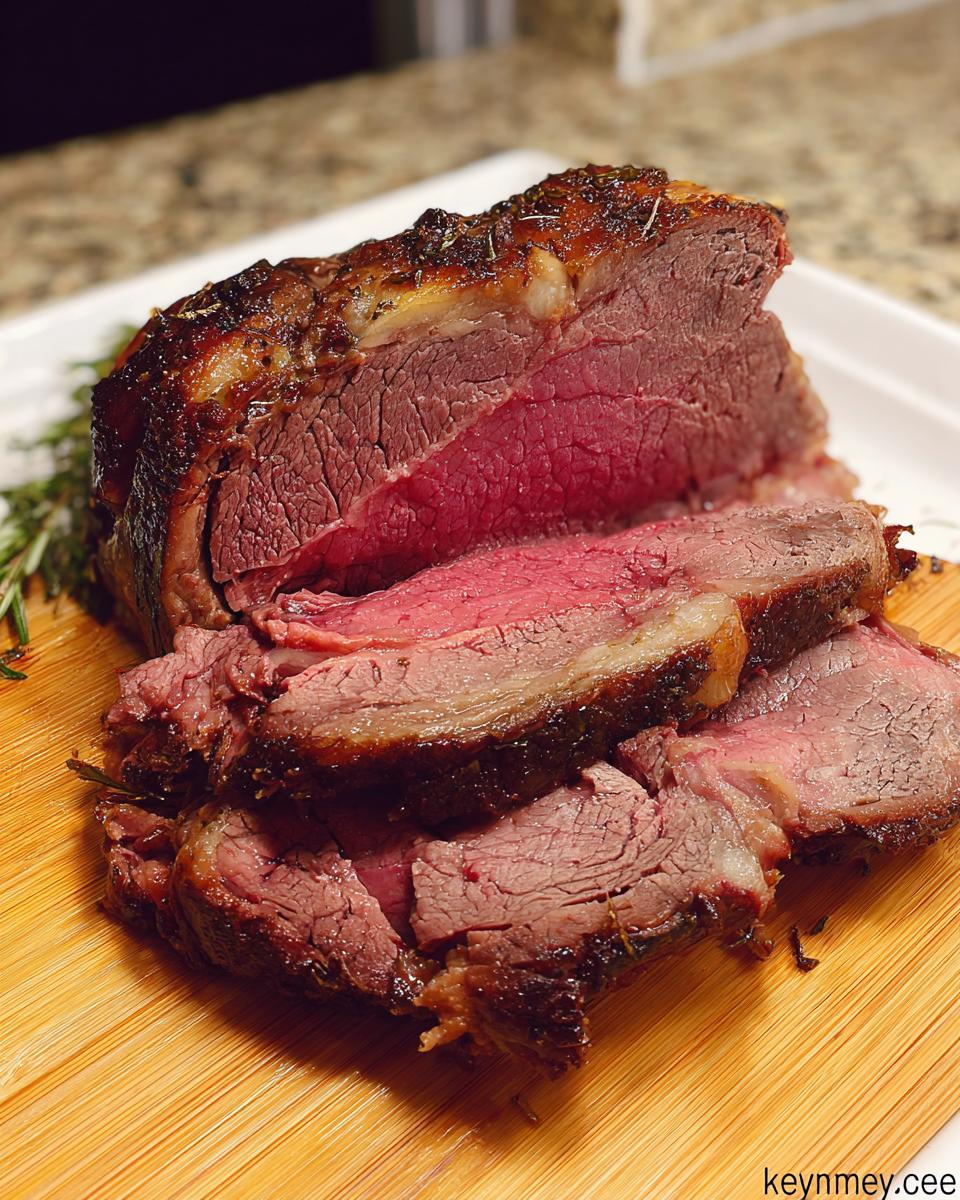
Okay, let’s talk numbers for a second! I know when we’re making a show-stopping **Holiday Roast** like this, we aren’t exactly counting calories, but it’s good to have a general idea of what you’re putting on the plate. Since this recipe is based on a 6-pound roast meant to serve about 10 of us, these figures give you a rough estimate per serving.
Keep in mind that the actual nutritional content can definitely swing depending on how much fat renders out during that long, slow cook, and, let’s be honest, how much rich Au Jus you slather on top! These estimates are just based on the meat itself after the fat has mostly dripped away.
- Estimated Calories: 361 per serving
- Fat Content: Pretty low at only 16.3 grams!
- Protein Power: Almost 49 grams—you’ll certainly feel satisfied!
- Carbohydrates: Just 4.1 grams total.
This data helps show that while it tastes incredibly indulgent, because we let so much of the fat drip away during the slow roast, it comes out leaner than you might expect for prime rib. It’s a true testament to proper cooking techniques!
Share Your Culinary Creations
Seriously, I pour my heart into sharing these secrets so you can create those jaw-dropping culinary moments at home, and I just love seeing what you all whip up! There is nothing better than serving a magnificent **Holiday Roast** that your friends and family rave about.
Once you tackle this recipe for **Boneless Prime Rib — Restaurant-Quality at Home**, please don’t keep that beautiful pink slice to yourself! I want to see your results!
Take a gorgeous picture of your finished roast—especially that crispy crust—and tag me on your preferred social media platform. When you share, tell me how the low-and-slow method helped you achieve that perfect doneness. Your success stories really inspire me and all the other home cooks reading along!
And hey, don’t forget to leave a rating right here on the recipe card! Did it deserve five stars for bringing that restaurant-quality sparkle to your dinner table? I’m putting in the work to perfect these methods, and your feedback genuinely helps others build confidence in creating their own unforgettable meals. Happy cooking, everyone!
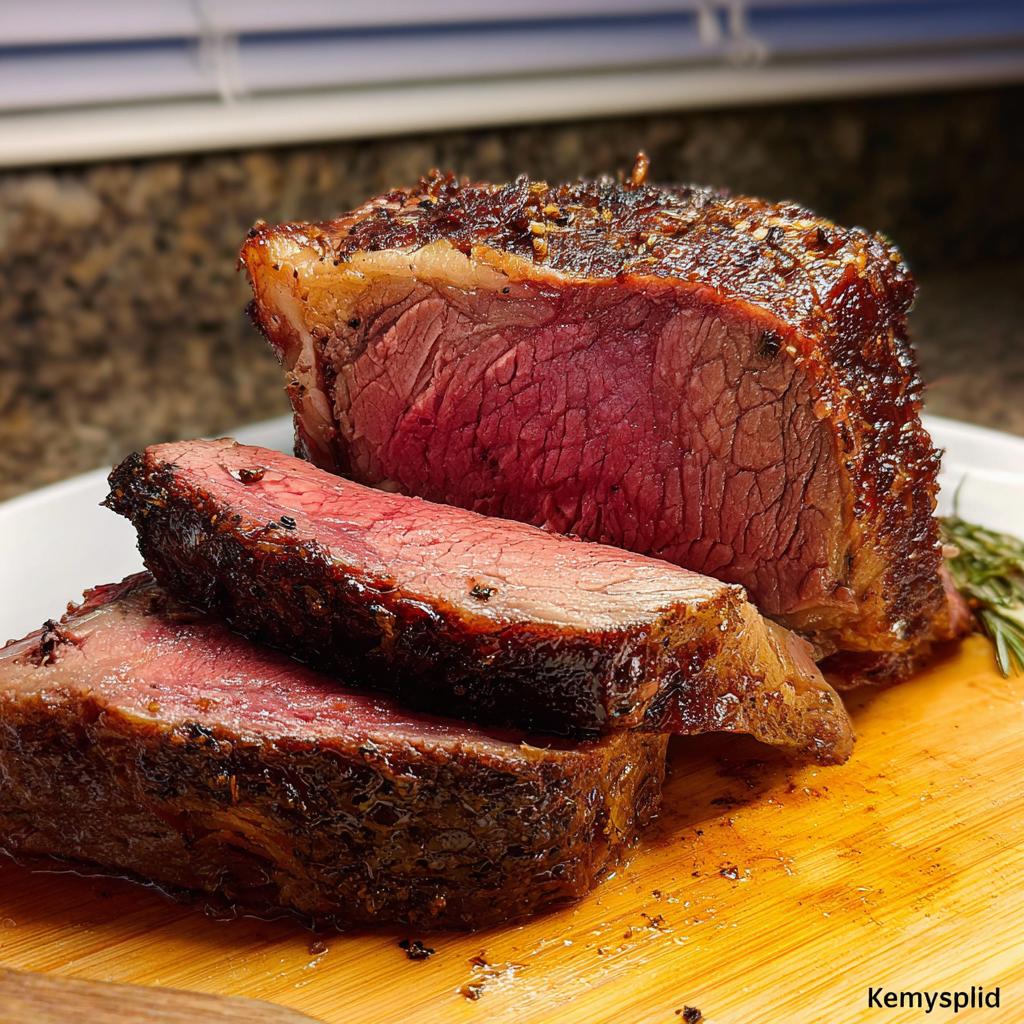
Boneless Prime Rib — Restaurant-Quality at Home
Ingredients
Equipment
Method
- Dry the prime rib roast thoroughly on all sides with paper towels.
- Evenly sprinkle the kosher salt over all sides of the roast from a height of about 6 inches.
- In a small bowl, combine rosemary, thyme, pepper, and paprika. Stir to combine, breaking up the rosemary. Evenly sprinkle this rub over the prime rib. Use your fingers to gently spread and massage the rub into the meat.
- Tightly wrap the roast twice in plastic wrap. Place on a plate and refrigerate overnight, or for at least 1 hour (preferably 6-24 hours) to allow flavors to meld.
- About 30 minutes before cooking, preheat your oven to 275F. Remove the roast from the refrigerator and unwrap it.
- Place a wire trivet in the bottom of a roasting pan or shallow oven-safe pan. Position the roast, fat side up, in the center of the trivet.
- Pour the beef broth into the bottom of the pan, avoiding the meat. If adding vegetables, toss them with oil, salt, and pepper, then place them around the roast.
- Insert an oven-safe meat thermometer into the center of the roast, ensuring it does not touch any fat.
- Place the roast in the preheated oven. Cook for approximately 2 hours and 25 minutes (about 24-27 minutes per pound) until the internal temperature reaches 125F for medium-rare. Check the temperature every 10-15 minutes after the first 2 hours.
- Prepare a piece of aluminum foil large enough to tent the roast.
- Carefully remove the roast from the oven. Tent the pan with aluminum foil. Increase the oven temperature to 450F and let it preheat while the roast rests for 15-20 minutes, or until the internal temperature reaches 130-135F.
- Remove the foil and meat thermometer. Return the roast to the oven for 5-8 minutes to sear until the crust is brown and crispy.
- Remove the roast from the oven. Transfer the prime rib to a cutting board and any vegetables to a serving dish. Save the drippings for Au Jus.
- Slice the roast against the grain using a sharp knife. Garnish with fresh rosemary if desired and serve hot with your chosen sides and Au Jus.
Nutrition
Notes
Tried this recipe?
Let us know how it was!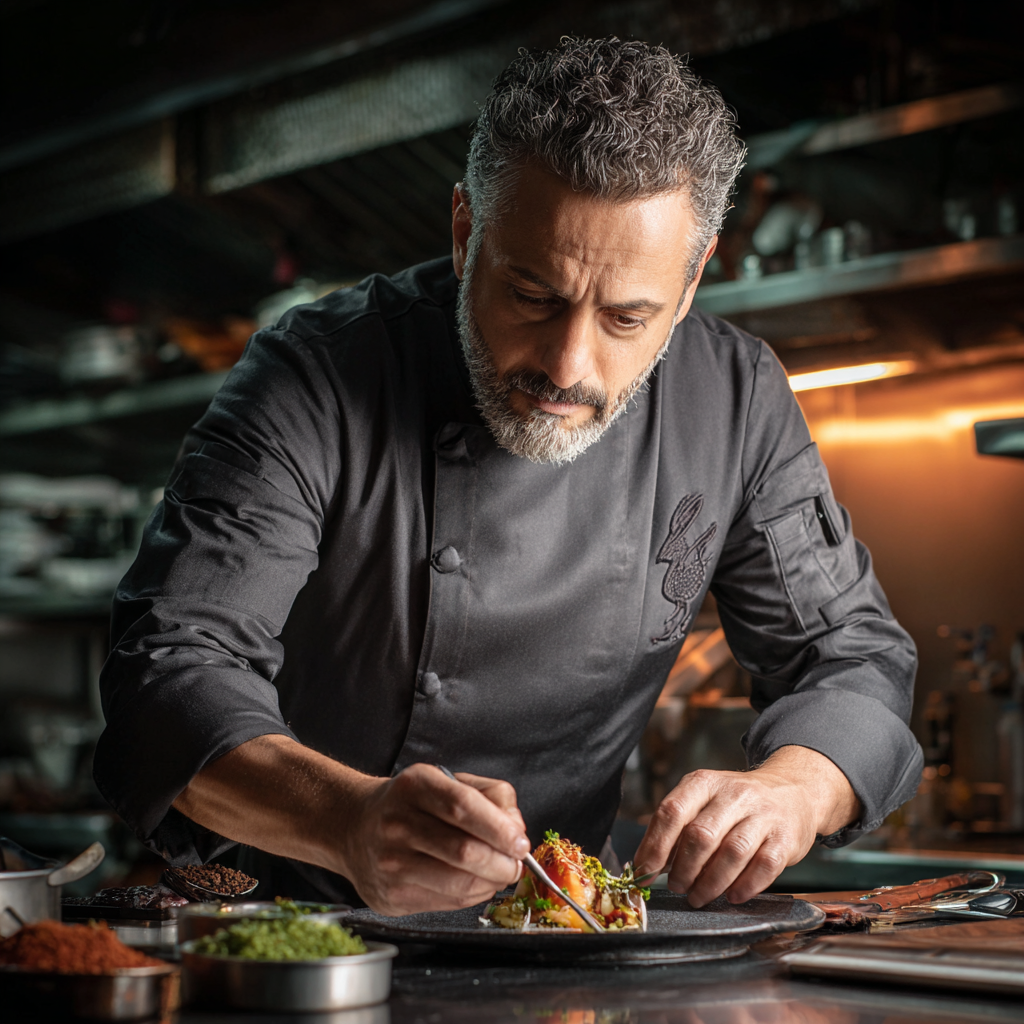
Master of Global Fusion Innovation
My culinary adventure reflects my Lebanese-Italian heritage and a decade spent in the dynamic fusion restaurant scenes of Miami and Barcelona. I’ve made it my mission to prove that beloved global comfort foods can be successfully adapted for low-carb living without losing their soul, their cultural authenticity, or their ability to comfort.
With advanced training in molecular gastronomy and experience spanning Mediterranean, Middle Eastern, and Latin American traditions, I’ve developed what I call “respectful innovation” – culinary creativity that honors traditional cooking wisdom rather than replacing it. My alternative ingredient substitution systems are now taught in specialty diet cooking schools throughout the region.
Drawing from my trilingual upbringing, I understand how deeply food connects to identity and memory. That’s why my flavor-bridging techniques allow classic dishes from around the world to maintain their comforting, familiar qualities while meeting contemporary nutritional standards. I regularly share these techniques at international culinary symposiums and innovation events.
When I’m not experimenting in my Miami fusion kitchen laboratory, you’ll find me at local salsa dance venues – the rhythm and improvisation skills translate directly to my creative cooking process! My role as a foster parent to rescue rabbits has unexpectedly inspired some of my most creative plant-based low-carb innovations.
My personal low-carb journey began as a way to maintain energy for my active lifestyle, but it’s evolved into a professional mission of proving that healthy eating can be globally adventurous rather than restrictively limiting. Every recipe I create is a passport to culinary adventure, transforming kitchens into laboratories for exploring healthy versions of the world’s most beloved comfort foods.