Ingredients
Equipment
Method
- Dry the prime rib roast thoroughly on all sides with paper towels.
- Evenly sprinkle the kosher salt over all sides of the roast from a height of about 6 inches.
- In a small bowl, combine rosemary, thyme, pepper, and paprika. Stir to combine, breaking up the rosemary. Evenly sprinkle this rub over the prime rib. Use your fingers to gently spread and massage the rub into the meat.
- Tightly wrap the roast twice in plastic wrap. Place on a plate and refrigerate overnight, or for at least 1 hour (preferably 6-24 hours) to allow flavors to meld.
- About 30 minutes before cooking, preheat your oven to 275F. Remove the roast from the refrigerator and unwrap it.
- Place a wire trivet in the bottom of a roasting pan or shallow oven-safe pan. Position the roast, fat side up, in the center of the trivet.
- Pour the beef broth into the bottom of the pan, avoiding the meat. If adding vegetables, toss them with oil, salt, and pepper, then place them around the roast.
- Insert an oven-safe meat thermometer into the center of the roast, ensuring it does not touch any fat.
- Place the roast in the preheated oven. Cook for approximately 2 hours and 25 minutes (about 24-27 minutes per pound) until the internal temperature reaches 125F for medium-rare. Check the temperature every 10-15 minutes after the first 2 hours.
- Prepare a piece of aluminum foil large enough to tent the roast.
- Carefully remove the roast from the oven. Tent the pan with aluminum foil. Increase the oven temperature to 450F and let it preheat while the roast rests for 15-20 minutes, or until the internal temperature reaches 130-135F.
- Remove the foil and meat thermometer. Return the roast to the oven for 5-8 minutes to sear until the crust is brown and crispy.
- Remove the roast from the oven. Transfer the prime rib to a cutting board and any vegetables to a serving dish. Save the drippings for Au Jus.
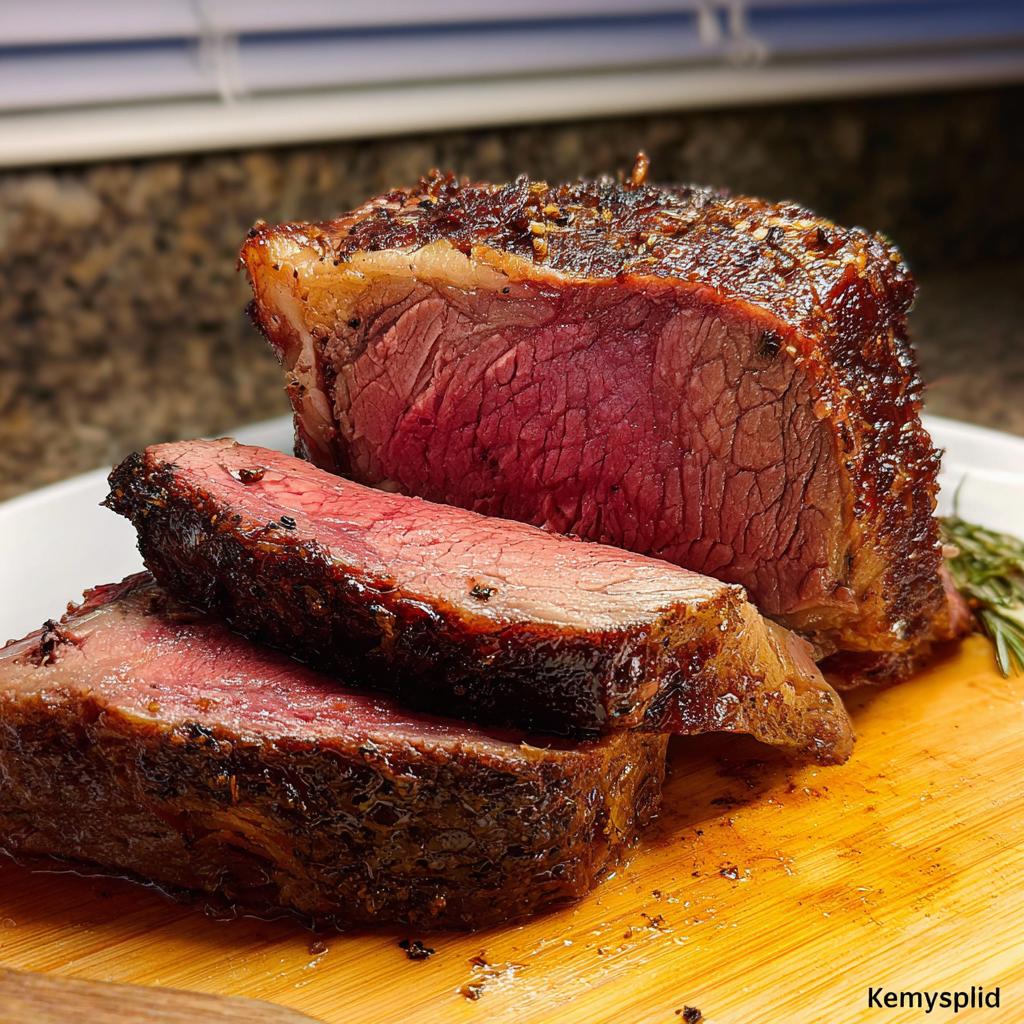
- Slice the roast against the grain using a sharp knife. Garnish with fresh rosemary if desired and serve hot with your chosen sides and Au Jus.
Nutrition
Notes
For different levels of doneness, aim for these internal temperatures: Rare (115F initial, 120-125F after rest), Medium (130-135F initial, 135-145F after rest), Medium Well (140-145F initial, 145-155F after rest), Well (150-155F initial, 155-165F after rest). Using a shallow pan ensures even airflow for uniform cooking. If a boneless roast is unavailable, a bone-in roast can be used; ask your butcher to remove the bone.