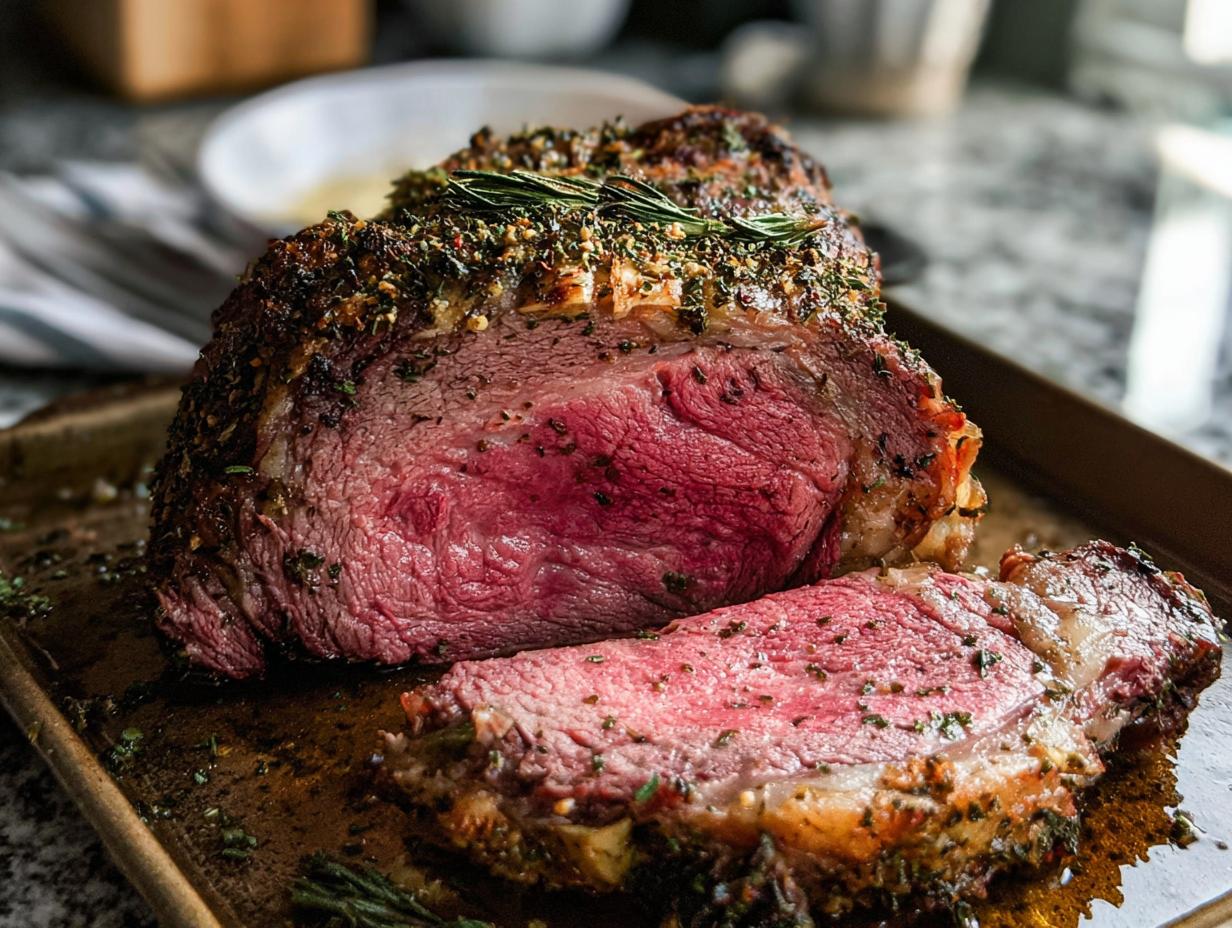
Okay, let’s talk about conquering that centerpiece roast! If you want that luscious, deep-red, perfectly crusted beauty you usually only see at fancy steakhouses, you absolutely can achieve it right here in your own oven. Forget all those complicated recipes; I’m sharing my trusted method in this How to Roast Prime Rib in the Oven (Foolproof Guide).
I’ll never forget my first Christmas roast; I was so nervous! The sheer size of the cut felt monumental, but watching my grandmother work her magic gave me the confidence boost I needed. That rich aroma filled the whole house, and when we finally carved into it—perfection! Smiles all around made the effort worth it.
That night kicked off a huge family tradition. Now, I’ve refined the technique so you don’t have to stress. This guide promises a juicy, restaurant-quality result every single time. Trust me, this method is completely stress-free!
Why This Method for How to Roast Prime Rib in the Oven (Foolproof Guide) Works
This isn’t just guesswork, folks; this technique in my How to Roast Prime Rib in the Oven (Foolproof Guide) is pure culinary science applied simply. Why do we start the oven scorching hot and then back off? Because we want two completely different outcomes, and this two-step temperature process delivers both beautifully.
It’s how the pros do it to ensure that outer layer of fat gets that incredible texture without overcooking the center. Read on, and I’ll show you exactly why following these heat instructions guarantees success.
Achieving a Perfect Sear
That initial blast at 500 degrees F is crucial! It helps create what’s called the Maillard reaction almost instantly on the surface meat. Think of it like giving the outside a quick, hard crisp—that beautiful brown crust—before the inside even knows what hit it.
We do this fast so we can then drop the temperature way down to that gentle 325 degrees F. This allows the middle to cook slowly and evenly, avoiding that dreaded gray band right under the surface we all hate.
The Importance of Resting Time
Once the roast hits your target temperature, you absolutely must let it rest for a full 30 minutes, loosely tented with foil. Don’t peek!
When the meat is hot, all the incredible juices are literally running around inside the muscle fibers, agitated and moving quickly. Resting lets those juices settle back down and redistribute evenly throughout the entire roast. If you carve too soon, all that glorious moisture just floods out onto your cutting board. We want that moisture *in* the meat!
Essential Ingredients for How to Roast Prime Rib in the Oven (Foolproof Guide)
You don’t need a dozen fancy things to nail this How to Roast Prime Rib in the Oven (Foolproof Guide). The magic here is really in the quality of the beef and using fresh herbs. Make sure you look for a nice, well-marbled piece of prime rib, obviously!
When you’re gathering your supplies, pay attention to the sizes. If you decide to go significantly bigger than the recommended 5 pounds, make sure you double up on the seasonings so you don’t end up with a bland crust.
Herb and Spice Rub Components
We’re keeping the rub simple but powerful. You’ll need the basics: sea salt and freshly ground black pepper. Then we bring in the aromatics. You’ve got to have fresh rosemary—none of that dried stuff if you can help it—and some fresh thyme for that incredible woodsy perfume.
The secret glue that brings this all together is the garlic. Make sure you mince those 8 cloves nice and small, and mix everything well with the olive oil to create a thick, spreadable paste. This paste is what gets slathered all over the roast to form that amazing outer layer.
Equipment Needed for How to Roast Prime Rib in the Oven (Foolproof Guide)
Getting my equipment ready is actually one of my favorite non-cooking parts of making a large roast. If you don’t have the right tools, even the best plan for How to Roast Prime Rib in the Oven (Foolproof Guide) can fall apart! Don’t stress too much about fancy gadgets; we only need a few sturdy basics for this job.
The absolute must-have is a good roasting pan. You want something deep enough to catch all those amazing drippings—you can use those later for gravy, trust me! I’ve got a whole guide on picking the best roasting pan if you need help deciding, but any sturdy metal one will do the trick.
Beyond the pan, you have two other crucial pieces of equipment. First, you need aluminum foil for that essential resting period we talked about. Second, and this is non-negotiable for accuracy? A reliable meat thermometer.
Now, here’s a little tip: if you are working with a boneless roast, I highly suggest you grab yourself a simple wire rack. You want the roast elevated so that air can circulate underneath it while it cooks. This helps ensure that the bottom doesn’t sit in the drippings and steam instead of roast. If you have a bone-in roast, the bones themselves act as a perfect natural rack, so you can often skip that extra step!
Step-by-Step Instructions: How to Roast Prime Rib in the Oven (Foolproof Guide)
Alright, this is where the show really begins! We’re going through the 8 essential steps for the best How to Roast Prime Rib in the Oven (Foolproof Guide). I love how this method forces you to focus on two crucial phases: slamming that heat for the crust, and then gently coaxing the center to perfection. If you can follow a timer, you can master this roast. It’s really that simple!
When you are ready for more deep dives into the meat prep, I highly recommend checking out this great external guide on roasting. But trust me, my simple three-part process below covers everything you need for that amazing flavor profile. And don’t forget to mix up that herb rub ahead of time; you can find my favorite version here: herb rub recipe.
Preparing the Roast and Oven
First things first: don’t even *think* about taking that gorgeous roast straight from the fridge to the oven. You need to let it temper! Pull your prime rib out about one full hour before you plan to cook. Loosely cover it, maybe with some plastic wrap, just to keep dust off. This lets the meat relax and warm up a bit, which is key for even cooking later on.
While that’s tempering, you need to get your oven happy and hot. Adjust that center rack up where it belongs, and crank the heat up to 500 degrees F. We want it screaming hot for our initial blast. We’re not aiming for internal temperature check yet; we’re just getting the oven ready for its job!
Applying the Seasoning and Initial Sear
Now for that flavorful crust! Take your mixed paste of herbs, garlic, oil, and seasonings, and really get it all over the roast. Don’t be shy—use your hands to rub it deeply into every surface. For a bone-in roast, lay it bone-side down in the pan. If you have a boneless one, pop it onto that wire rack we talked about inside the pan.
Here’s the payoff for all that patience: open the oven door and carefully slide that roast in. We roast hard at 500 degrees F for exactly 15 minutes. I mean it, set a timer! This high heat sears the exterior perfectly. Once that 15 minutes is up, immediately drop the temperature down to 325 degrees F and continue cooking it based on your desired doneness. You can find more great cooking advice over at this external link!
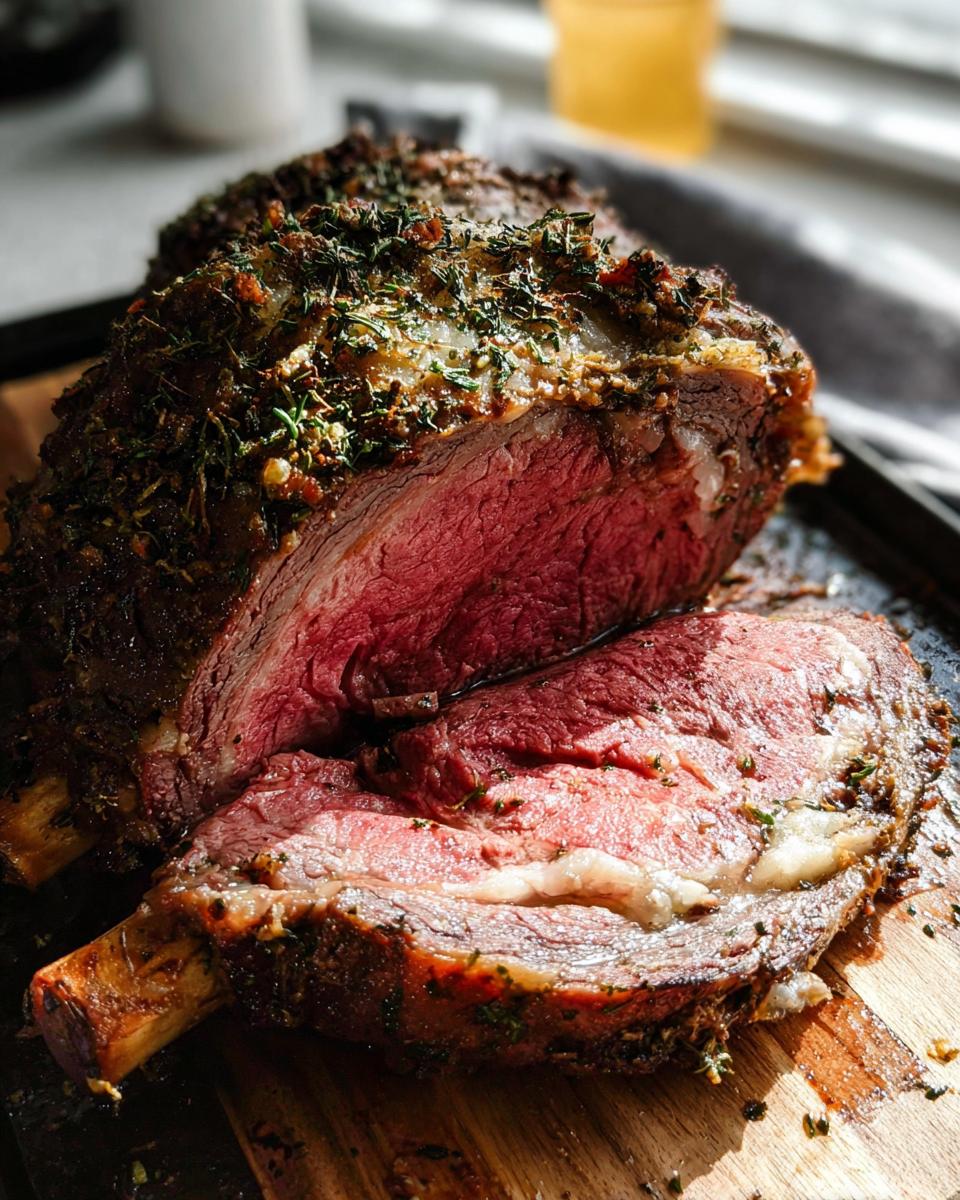
Determining Prime Rib Internal Temperature for Perfect Results
Stop guessing! The single most important thing you can buy—even more important than the roasting pan—is a reliable meat thermometer. You absolutely cannot tell the Prime Rib Internal Temperature just by looking at the outside or poking it with your finger. When cooking a beautiful, expensive piece of meat like this, precision is your friend.
Here are the numbers you need to aim for. Remember, you must pull the roast out of the oven when it’s still 5 to 10 degrees below your final goal, because it continues cooking while it rests. That carry-over cooking is real magic!
- For Rare (That beautiful red center): Pull it out at 120 degrees F.
- For Medium-Rare (My personal, non-negotiable favorite): Pull it out at 125 to 130 degrees F.
- For Medium (If your Aunt Susan insists): Aim to pull it around 135 to 140 degrees F.
Calculating Cooking Time Based on Weight (How Long To Cook 8lb Prime Rib)
People constantly ask me How Long To Cook 8lb Prime Rib. The honest answer is: I don’t know exactly, and neither does anyone else without a thermometer, because every oven runs differently, and every roast has a slightly different shape!
However, for scheduling purposes, you can estimate about 13 to 15 minutes per pound when cooking at 325 degrees F after the initial sear. That means an 8-pound roast might take around an hour and 45 minutes total cooking time, but you must check the temperature constantly after the first hour. If you’re tackling something huge, like How To Cook 15 Pound Prime Rib, the time per pound actually drops slightly because the outside cooks faster relative to the center. But honestly? Ignore the clock once the temperature probe is in place!
Tips for Cooking a Small Prime Rib Roast Oven
So, what if you aren’t feeding a crowd of 20 and are looking at a more manageable cut? You might be Googling tips for a Small Prime Rib Roast Oven, and that’s totally fine! Smaller roasts are sometimes even trickier because they can dry out much faster, especially during that initial high-heat blast.
For a smaller cut, I strongly recommend reducing that initial 500 degrees F searing time. Instead of 15 minutes, stick it in there for just 10 to 12 minutes. You still want that crust, but you don’t want it to burn while the interior stays icy cold.
Once you drop it down to 325 degrees F, start checking your internal temperature much sooner than you think! A large 12-pound roast needs a lot of time at the lower temp, but a petite roast flies through that temperature zone fast. You might only need an hour, tops. Keep your thermometer ready!
And here’s a personal trick, especially crucial for smaller cuts: if your small prime rib roast has bones attached, always insert your thermometer into the thickest part of the meat, making sure the tip is centered and *not* touching any of the bone itself. The bone heats up faster, and you’ll pull the roast early thinking it’s done when it hasn’t even made it halfway. This simple check makes the whole How to Roast Prime Rib in the Oven (Foolproof Guide) flawless.
Serving Suggestions and Storing Leftovers
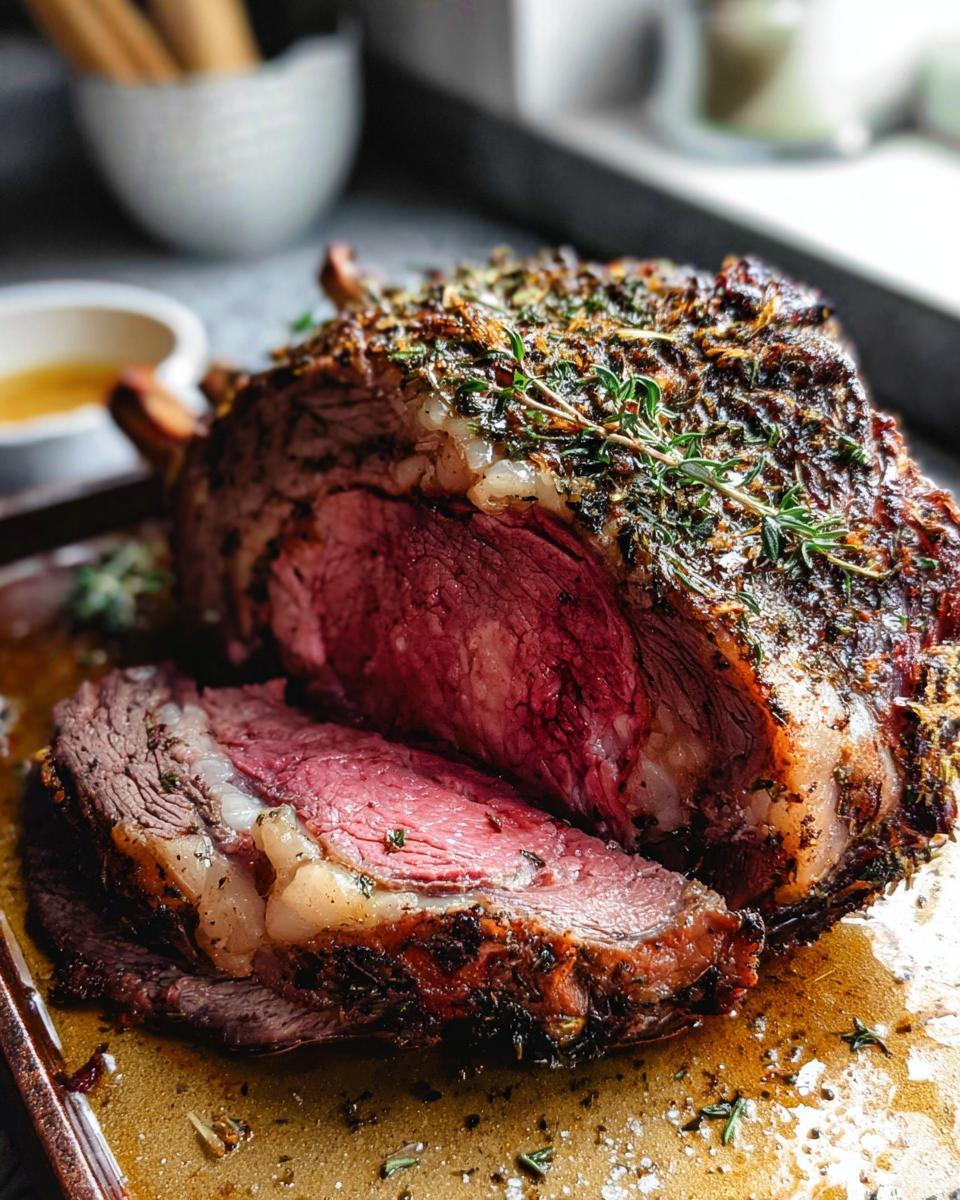
The moment of truth! You’ve waited 30 long minutes—I know, it’s torture—but now it’s time to carve this masterpiece. Serving the roast correctly is just as important as cooking it correctly; nobody wants tough, chewy slices after all that hard work, right?
When you’re ready for the perfect accompaniment, make sure you check out my recipe for a rich, savory gravy sauce recipe to pour right over the top. It makes the whole dish sing!
How to Carve for Maximum Tenderness
This is super important, so listen up! You must slice your prime rib against the grain. What does that mean in normal-person terms? You need to look closely at the meat and see the direction the muscle fibers are running in long lines. Your knife should cut perpendicularly across those lines.
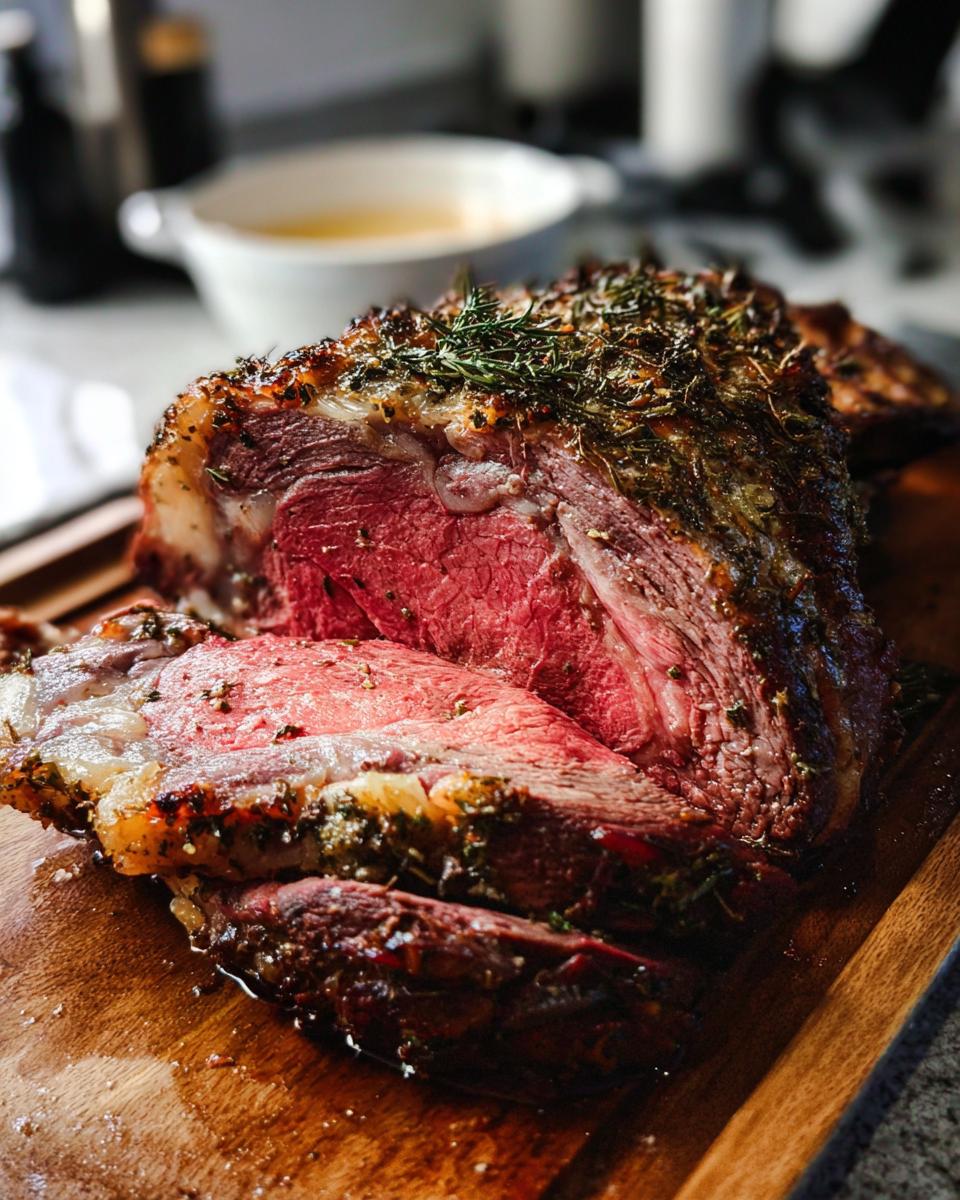
Cutting against the grain shortens those muscle fibers, making every slice incredibly tender as you eat it. If you cut with the grain, you’ll end up with long, chewy strips, and all our careful cooking went to waste! Slice those pieces about a half-inch thick, or a little thinner if you cooked it past medium-rare.
Don’t forget those classic condiments! A good, sharp horseradish is almost mandatory at our table; it cuts through the richness of the beef beautifully. It’s the perfect final touch!
Now, if you are lucky enough to have leftovers (which is rare at our house!), storage is easy but important. Make sure you let any remaining slices cool down a bit first. Then, you want to pack them tightly in an airtight container. For reheating, I never microwave prime rib! I find the best method is slicing up the leftovers and heating them gently in a little beef broth on the stovetop until they are just warmed through. Slow and steady wins the race for tenderness!
Frequently Asked Questions About How to Roast Prime Rib in the Oven (Foolproof Guide)
I totally get it—when you’re making something this impressive for the holidays or a big celebration, you’re going to have questions! That’s what this section is for. We’re going to tackle the most common worries people have when trying my How to Roast Prime Rib in the Oven (Foolproof Guide) so you can walk into your kitchen with total confidence.
If you’re worrying about things like size variations, like how How To Cook 15 Pound Prime Rib would differ from a tiny roast, just remember the golden rule: temperature beats time every single time!
Can I cook my prime rib from frozen?
Oh, honey, please don’t try it! This is not the kind of recipe where you want to improvise with frozen meat. When you put a frozen roast into a 500-degree oven, you’re going to instantly burn the outside before the center even begins to thaw properly. You’ll end up with a rock-hard, grayish interior and a crust that’s just burnt, not browned.
You MUST temper the meat by letting it sit out for at least an hour before cooking, as I noted in the instructions. If you realize last minute you forgot to thaw it overnight, the absolute safest thing to do is place it in the refrigerator on a pan and let it thaw slowly—this might take 24 to 48 hours depending on the size. Never rush the thaw!
What is the best way to check the Prime Rib Internal Temperature?
We talked about investing in a good meat thermometer, and this is why! The best technique involves inserting the probe into the absolute thickest part of the roast. This is usually the center area, away from the bone if you have a bone-in cut. You want to ensure the tip of the thermometer is nestled right in the middle of the meat mass.
Crucially, make absolutely certain that the tip is not touching any bone! Bones heat up much faster than the actual muscle tissue, and if your thermometer is touching bone, it will give you a falsely high reading. You’ll pull the roast out too early, and it won’t finish cooking properly as it rests. Trust the thermometer, keep the probe centered, and you will nail that perfect Prime Rib Internal Temperature every time.
How long do I need to cook a 10-pound roast?
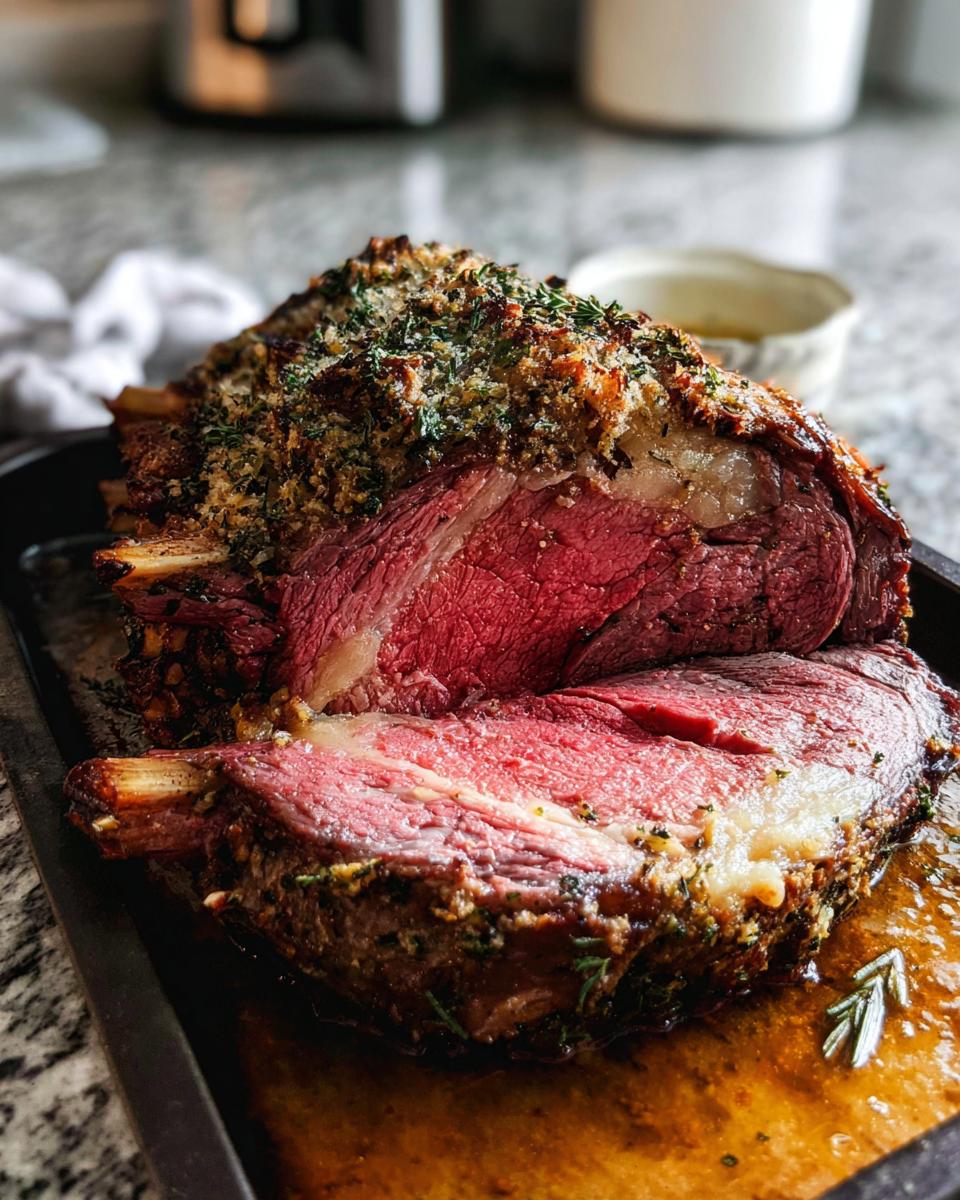
Just like how How Long To Cook 8lb Prime Rib varies, a 10-pound roast follows the same general rule: estimate about 13 to 15 minutes per pound *after* the initial 15-minute blast at 500 degrees F, all while maintaining that 325 degrees F oven setting. For a 10-pounder, that puts you closer to 2 hours and 15 minutes of total cooking time including the initial sear time.
But I have to say this again because it bears repeating: the clock is just a suggestion for the prep time. The thermometer is your real guide. Start checking the temperature around the 1 hour 30 minute mark of cooking time, and adjust based on those target numbers we discussed!
Estimated Nutritional Data for This Prime Rib Recipe
Now, I know we aren’t making this roast for health food reasons—it’s a spectacular indulgence! But for those of you who like to keep track, I’ve pulled the estimated nutritional breakdown from a standard serving size of this recipe. Remember, prime rib is a rich meat, so you’ll see a higher fat content here; that’s where all the flavor comes from, after all!
Please take these numbers with a giant grain of salt, because they are just estimates. The exact values for your amazing roast are going to drastically change depending on how much fat you trim away, the specific marbling of your cut of beef, and whether you serve it with any of my famous pan drippings! But this gives you a general idea of what’s in one generous slice.
- Calories: 729
- Fat: 66g (That’s where the richness lives!)
- Saturated Fat: 26g
- Cholesterol: 137mg
- Protein: 31g
- Carbohydrates: Just 1g (Yep, practically zero!)
- Sodium: 102mg (This is surprisingly low because most of the salt is in the crust we apply externally!)
- Iron: 3mg
See? All that glorious richness means it’s a big commitment in the calorie department, but look at that boost of protein! It’s the perfect centerpiece for a celebration meal where you want everyone to feel satisfied and deeply happy. Enjoy every single bite!
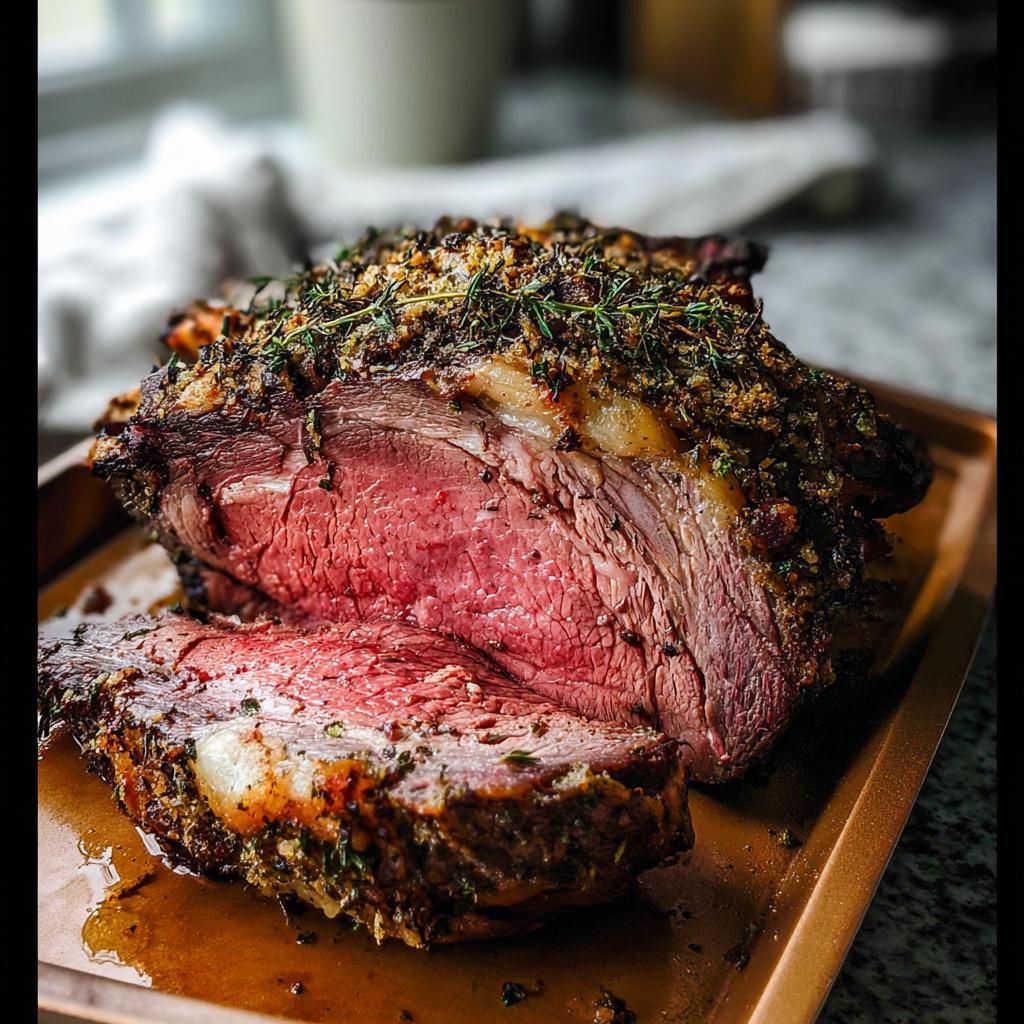
How to Roast Prime Rib in the Oven (Foolproof Guide)
Ingredients
Equipment
Method
- Remove the prime rib from the refrigerator one hour before cooking. Season it on all sides with salt and cover it loosely with plastic wrap. This allows the meat to come to room temperature for more even cooking.
- Adjust your oven rack to the center position. Preheat your oven to 500 degrees F.
- In a small bowl, mix together 1 1/2 teaspoons salt, pepper, rosemary, thyme, minced garlic, and olive oil.
- Pat the prime rib dry with paper towels. Spoon the seasoning mixture over the roast, rubbing it onto all sides. Place a bone-in roast bone-side down in a roasting pan. If using a boneless roast, place it on a rack inside the roasting pan.
- Roast the prime rib at 500 degrees F for 15 minutes. Then, reduce the oven temperature to 325 degrees F and continue roasting until it reaches your desired internal temperature.
- Use a meat thermometer to check the temperature. For rare, aim for 120 degrees F. For medium-rare, aim for 130 degrees F. For medium, aim for 140 degrees F. For medium-well, aim for 150 degrees F. Remember to remove the roast 5-10 degrees before your target temperature, as it will continue to cook while resting.
- Remove the prime rib from the oven and tent it loosely with aluminum foil. Let it rest for 30 minutes before carving.
- Carve the prime rib roast by slicing against the grain into 1/2-inch thick slices. Serve with horseradish, if desired.
Nutrition
Notes
Tried this recipe?
Let us know how it was!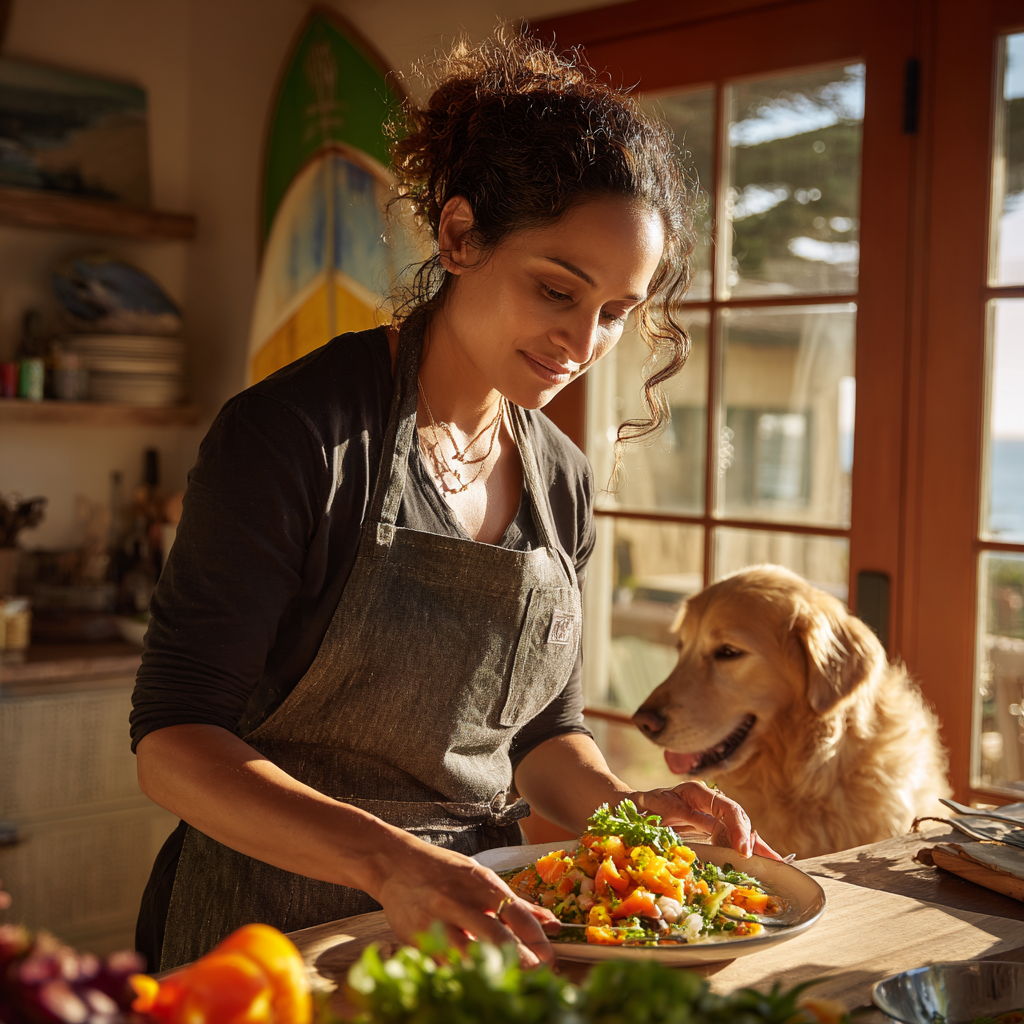
Master of Culinary Visual Arts
My culinary journey started in the fast-paced kitchens of boutique coastal restaurants throughout Southern California, where I learned that beautiful food doesn’t have to be complicated. After nine years of professional cooking, I’ve made it my mission to prove that sophisticated, nutritionally sound meals can be accessible to busy home cooks who refuse to compromise on flavor or visual appeal.
What changed everything for me was watching talented home cooks feel intimidated by healthy cooking. That’s when I transitioned to private instruction, teaching busy professionals and families how to create restaurant-quality meals using simple techniques and ingredients they can actually find at their local grocery store. My “15-minute meal” frameworks are now used by several regional cooking schools!
As a third-generation Mexican-American, I love weaving vibrant Latin flavors into low-carb creations – proving that healthy eating can be both culturally authentic and visually spectacular. My “effortless elegance” philosophy is simple: nutritious food should look as stunning as it tastes, without requiring professional chef skills or expensive equipment.
When I’m not developing recipes in my San Diego coastal kitchen, you’ll find me surfing the local breaks with my Golden Retriever mix, Mango, who’s both my kitchen companion and unofficial taste-testing assistant. My personal low-carb lifestyle started as a way to maintain energy for my active coastal life, and it’s become the foundation for proving that healthy eating enhances rather than restricts life’s pleasures.