
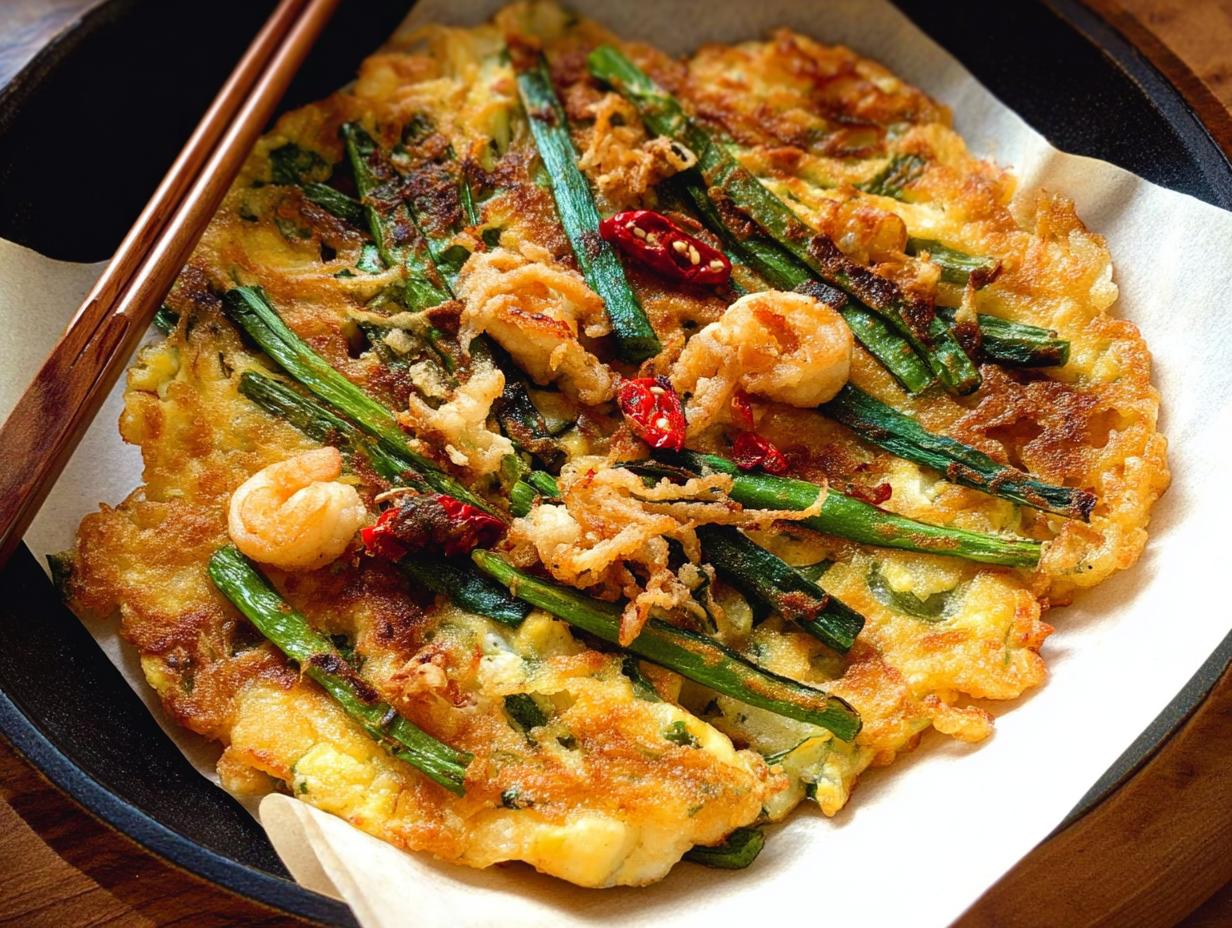
Oh, Korean Pancakes (Pajeon)! Let me tell you, my first taste of these was at a bustling food festival down in Miami, and it was love at first bite. The colors, the smells – wow! I was so inspired, I just *had* to try making them myself. But you know me, I always like to put my own spin on things, especially when it comes to keeping things low-carb and healthy. So, I tinkered and tested, and now I’ve got a version that captures all that amazing traditional flavor while being super accessible, even for us home cooks. As a Master of Global Fusion Innovation, I promise this isn’t just a recipe; it’s an invitation to explore incredible global flavors right in your own kitchen.
Why You’ll Love These Korean Pancakes (Pajeon)
Okay, get ready, because these Korean Pancakes (Pajeon) are seriously addictive! You’re going to fall in love with them for so many reasons:
- Super Easy to Make: Trust me, even if you’re new to Korean cooking, these come together surprisingly fast. The batter is a breeze, and cooking them is totally manageable.
- Flavor Explosion: That mix of savory green onions, tender seafood, and that awesome crispy texture? Pure deliciousness that will have you coming back for more.
- So Versatile: Don’t love seafood? No problem! You can totally switch up the fillings. They’re perfect as an appetizer or even a light meal.
- Low-Carb Friendly: And the best part? My little twist means you can enjoy that classic Pajeon taste without all the carbs. It’s a win-win!
Ingredients for Authentic Korean Pancakes (Pajeon)
Alright, let’s get down to business and talk about what you’ll need for these amazing Korean Pancakes (Pajeon). Don’t worry, it’s pretty straightforward!
For the Pancake Batter
This is the heart of your Pajeon, and we want it just right:
- 1 cup plain flour
- 1 Tbsp cornstarch (this really helps with crispiness!)
- 1 1/8 tsp fine salt
- 1 1/8 tsp garlic powder
- 1 1/8 tsp onion powder
- 1 cup icy cold water (seriously, make it COLD, or use sparkling water if you have it – it makes a difference!)
For the Topping
Here’s where we add all the good stuff:
- About 12 green onion tops (just the green parts), cleaned and cut lengthwise to fit your pan. Make sure they’re long enough to span your skillet!
- 100g calamari, cleaned and cut into little finger-sized pieces.
- 100g prawns, cleaned and cut into smaller pieces.
- A few sprinkles of ground black pepper (just a touch to season the seafood).
- 1 egg, beaten.
- 1 red chili (if you like a bit of heat!), thinly sliced diagonally.
For Cooking
The essentials for getting that perfect fry:
- About 6 Tbsp of cooking oil – you’ll want around 3 Tbsp for each pancake.
Quick note: A standard cup is about 250ml and a tablespoon is 15ml. If you’re using a pre-made Korean pancake mix, you can skip the flour, cornstarch, salt, garlic, and onion powders – just follow the package directions!
Step-by-Step Guide to Making Korean Pancakes (Pajeon)
Alright, this is where the magic happens! Don’t be intimidated – making these Korean Pancakes (Pajeon) is really quite straightforward. Just follow along, and you’ll be smelling that amazing aroma in no time. Trust me, the key is all in the heat and that nice cold batter!
-
First things first, let’s get that batter ready! Grab a medium-sized bowl and whisk together your flour, cornstarch, salt, garlic powder, and onion powder. Now for the secret weapon: add that super icy cold water (or sparkling water, if you’re feeling fancy!) and whisk it all up until you have a nice, smooth batter. Don’t overmix it, though! Just get it combined. Then, pour this lovely mixture into a measuring jug – it makes pouring it into the pan so much easier later.
-
Next up, the pan. Add about 3 tablespoons of cooking oil to your frying pan and spread it around. Get the heat up to medium-high and let that pan get nice and hot. Be careful, hot oil can be a bit splashy!
-
How do you know when the oil is ready? Easy! Just drop a tiny bit of that batter in. If it sizzles right away, you’re good to go. Lower the heat just a touch to medium-high. Now, pour a little less than half a cup of your batter into the hot pan, swirling it around to make a thin, even layer. We want it thin for that perfect crisp!
-
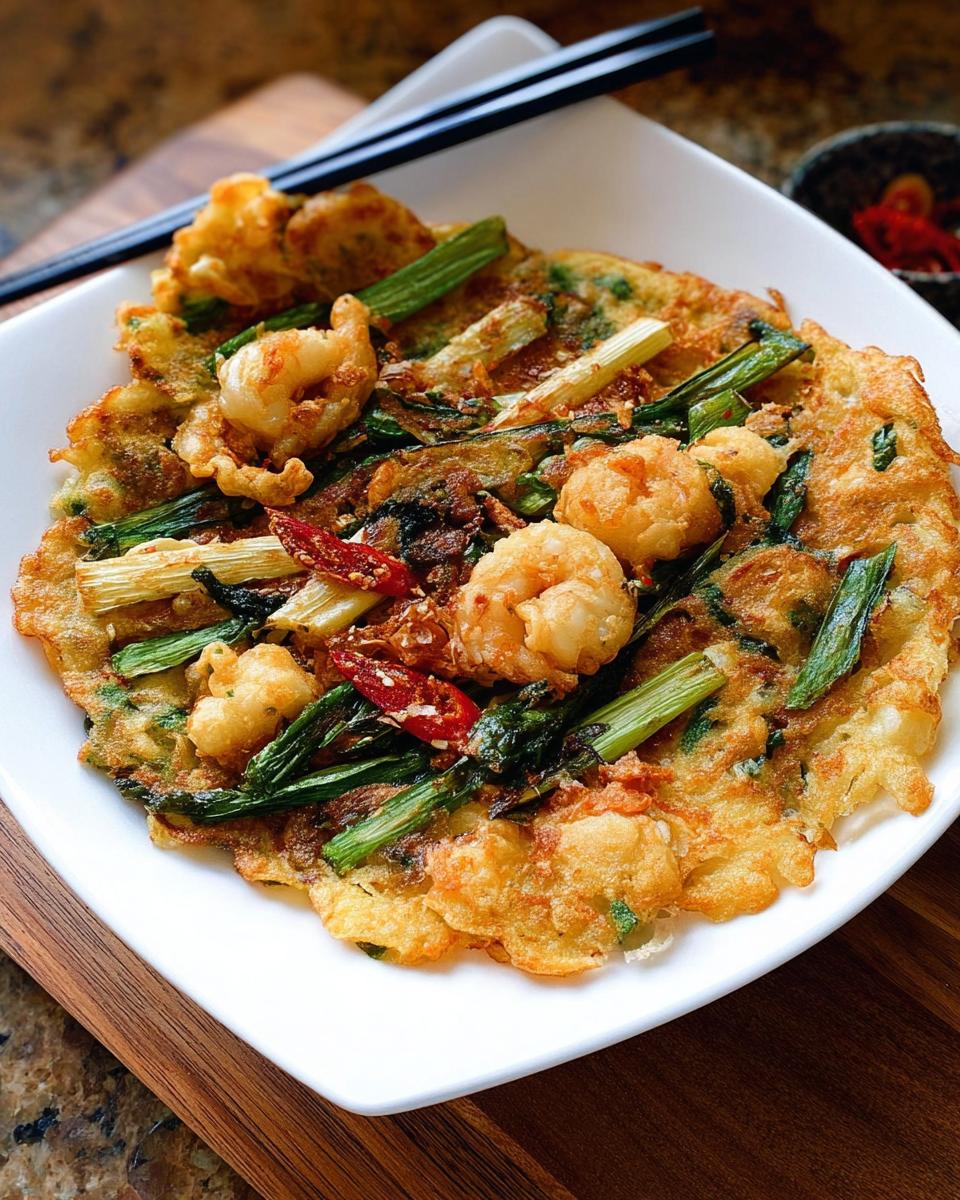
Time for the stars of the show! Arrange about 6 of those long green onion tops parallel to each other right on top of the batter. Then, gently drizzle a tiny bit more batter over and in between the onions to hold them in place. Lower the heat to medium now to let everything cook through without burning.
-
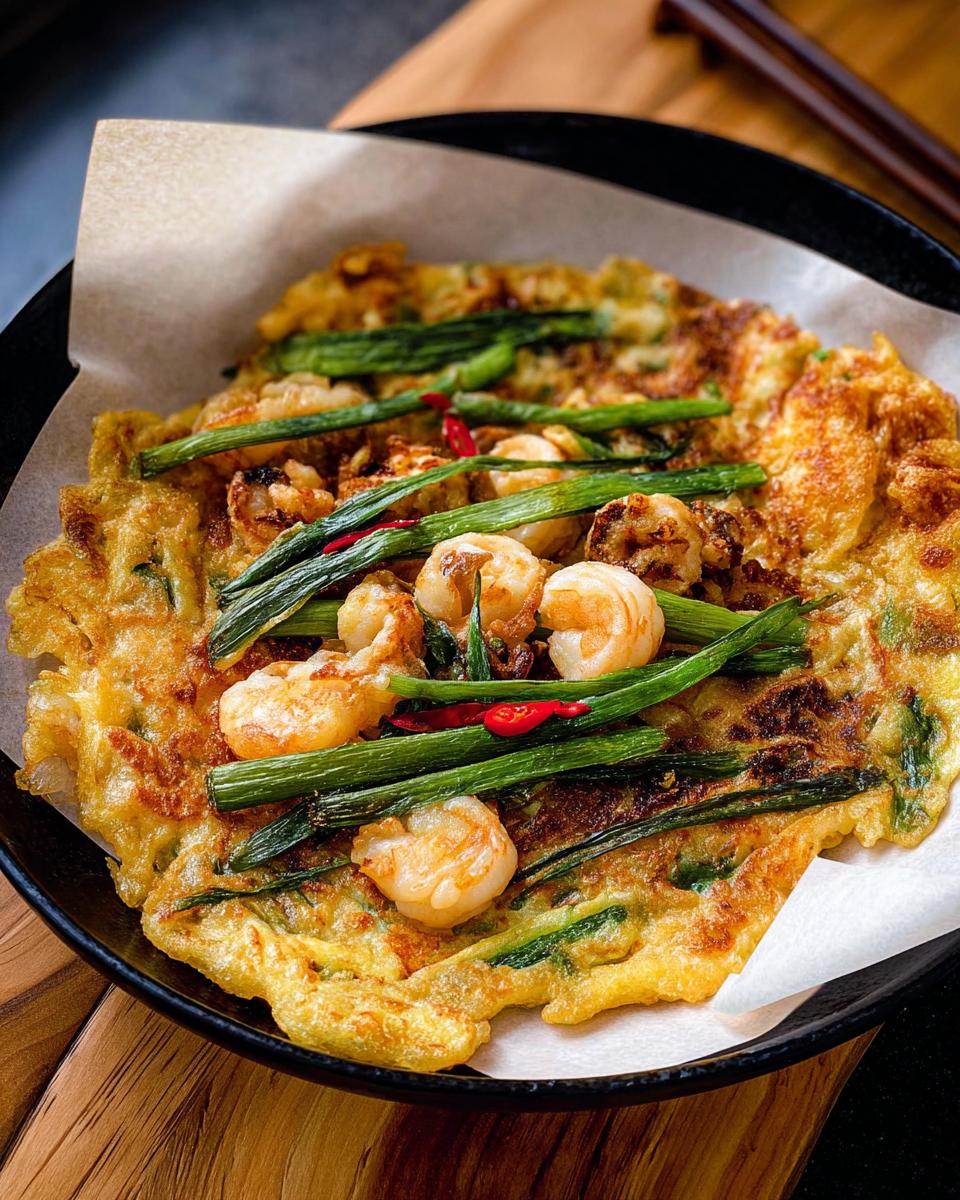
Sparsely scatter your little calamari pieces, prawns, and if you’re using them, those pretty red chili slices over the green onions. Don’t pile them on too much; we want everything to cook evenly.
-
Now, take half of that beaten egg and drizzle it all over the pancake. As it starts to cook, give the pan a gentle swirl in a circular motion. This helps make sure the pancake doesn’t stick and gets nice and crispy all around. It’s like a little dance for your pan!
-
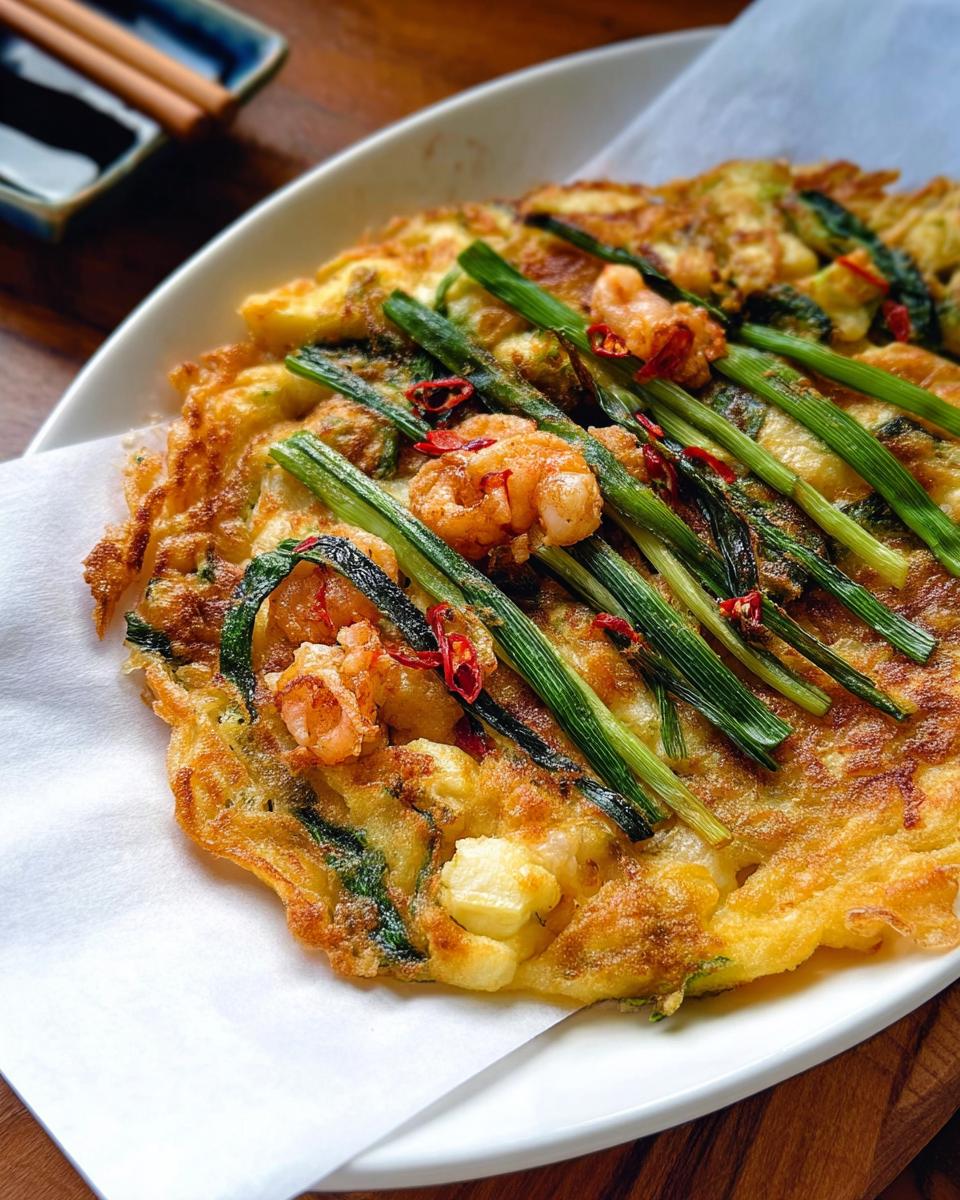
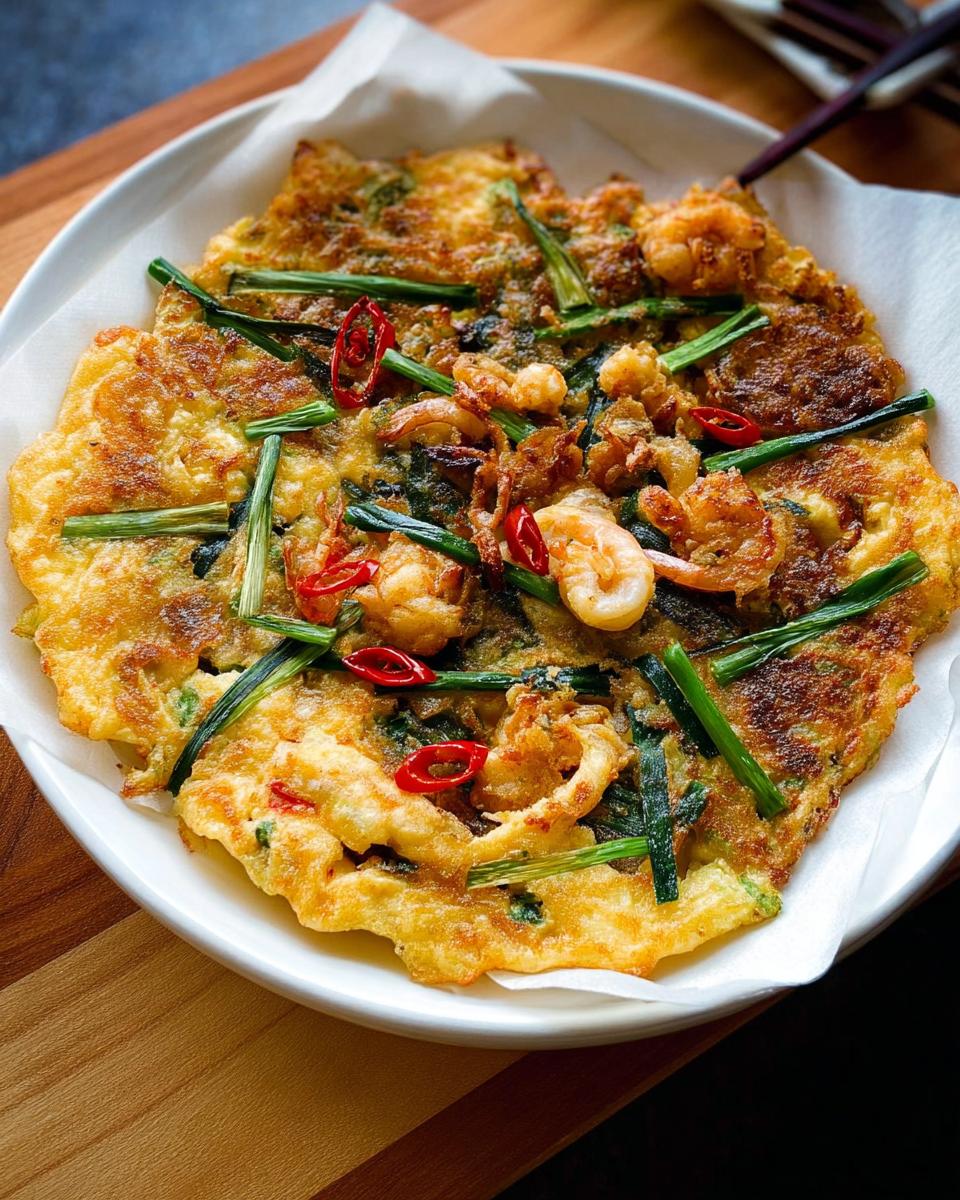
You’ll know it’s time to flip when the top of the pancake looks mostly cooked, which usually takes about 4 minutes. Flipping is way easier when it’s nicely set. If you need a little help releasing it, just add a tiny bit more oil around the edges of the pancake. Once flipped, press down gently with your spatula a couple of times – this is key for getting that super crispy texture! Cook the other side for another 3 to 4 minutes until golden brown. Turn off the heat and carefully slide that beautiful pancake onto a plate or cutting board.
Looking for more pancake fun? Check out these easy homemade pancakes!
-
Repeat all those steps – from heating the oil to that final crispy flip – with the rest of your batter and toppings to make the second glorious pancake. You want to keep that pan nice and hot for the best results.
-
And voilà! Slice your Korean Pancakes (Pajeon) into bite-sized pieces, perfect for sharing (or not!). Serve them hot with your favorite Korean pancake dipping sauce, and get ready for some serious yum!
Tips for Perfect Korean Pancakes (Pajeon)
Making these Korean Pancakes (Pajeon) is super rewarding, and a few little tricks can make them absolutely perfect:
- Cold Batter is Key: Seriously, use the iciest water you can find, or even sparkling water. This makes the batter super crisp when it hits that hot oil. A warm batter just won’t give you that delightful crunch.
- Hot Pan, Hot Oil: Don’t be shy with the heat! A well-preheated pan and plenty of hot oil are crucial for getting that beautiful golden-brown sear and crispy edge. If your pan isn’t hot enough, the pancake will soak up too much oil and get greasy instead of crisp.
- Don’t Overcrowd: Whether it’s the green onions, the seafood, or the batter, spread things out evenly. Overcrowding will steam the ingredients instead of cooking them properly, and you won’t get that lovely texture.
- Press for Crispiness: That gentle press with the spatula after flipping? It’s non-negotiable! It helps push out any extra air and ensures the whole pancake gets nice and crispy, especially around the edges.
Ingredient Notes and Substitutions for Pajeon
Okay, let’s chat about a couple of key ingredients and how you can make these Korean Pancakes (Pajeon) work for you!
The Seafood: Mix and Match!
The calamari and prawns give this Pajeon such a fantastic flavor, but don’t worry if you’re not a big fan or have allergies! You can totally swap them out. Thinly sliced mushrooms (like shiitake or oyster), zucchini, or even some finely chopped kimchi work wonderfully as a vegetarian or vegan alternative. Just make sure whatever you use is cut into small, manageable pieces so they cook through nicely.
Going Veggie (or Vegan!)
If you want to skip the seafood altogether, you’ve got lots of options! A vegetarian Pajeon would be delicious with just extra green onions, maybe some thinly sliced bell peppers, or even some pan-fried tofu cubes. For a fully vegan pancake, just skip the egg drizzled on top. Seriously, the chili and green onions are so flavorful, you won’t even miss it!
That Icy Water Trick
I know, I know, “icy cold water” sounds a bit fussy, right? But trust me on this one! Using super cold water, or even better, sparkling water, helps create a really light and crispy pancake batter. It’s one of those little secrets that makes a big difference. If you don’t have ice, just pop your water in the freezer for 15-20 minutes before you start mixing!
Serving Suggestions for Korean Pancakes
These Korean Pancakes (Pajeon) are absolutely divine served hot off the pan! The classic way to enjoy them is with a simple dipping sauce – usually soy sauce mixed with rice vinegar, a little sesame oil, and a pinch of sugar. It’s the perfect tangy, savory counterpoint! If you’re looking for more ideas, these pancakes are fantastic alongside other Korean dishes or even as a light meal with a simple side salad. Honestly, they’re so versatile, you can pair them with almost anything! For more inspiration, check out these 100 side dish recipes!
Frequently Asked Questions about Korean Pancakes (Pajeon)
Got questions about whipping up these delicious Korean Pancakes (Pajeon)? I’ve got you covered!
Can I make Pajeon vegetarian or even vegan?
Absolutely! If you want to make your Pajeon vegetarian, just skip the seafood and load up on extra green onions, or add some thinly sliced mushrooms, zucchini, or even bell peppers. For a fully vegan version, skip the egg drizzle on top. The batter itself is already vegan, and it’s still incredibly flavorful!
What’s the best dipping sauce for Korean Pancakes?
The classic dipping sauce is a must-have for Pajeon! It’s usually a simple mix of soy sauce and rice vinegar, with a touch of sesame oil and maybe a pinch of sugar or honey. Some people also like to add a little minced garlic or gochugaru (Korean chili flakes) for a kick. It’s super easy to whip up and makes a world of difference!
How do I store leftover Pajeon?
Honestly, Pajeon is best enjoyed fresh and crispy right off the pan. But if you do have leftovers, let them cool completely before storing them in an airtight container in the refrigerator. They’ll usually keep for about 1-2 days. You can reheat them in a dry skillet over medium heat or in a toaster oven to try and get some of that crispiness back, though they won’t be quite as perfect as when they’re freshly made.
Why are my Korean Pancakes not crispy?
Ah, the quest for crispiness! Several things can help. Make sure your batter is nice and cold, and your oil and pan are properly hot before you pour the batter in. Don’t overcrowd the pan with too many ingredients, and remember that gentle press with the spatula after flipping – it really helps seal the deal for a crispy finish. Using sparkling water in the batter can also give it an extra boost!
Nutritional Information (Estimated)
Just a heads-up, this nutritional info is an estimate because, you know, cooking can vary! Based on the ingredients and the way we make these amazing Korean Pancakes (Pajeon), you’re looking at roughly 783 calories, 62g carbohydrates, 29g protein, and 46g fat per serving. It’s a generous appetizer, packed with flavor and good stuff! For more on healthy eating, check out these healthy meal prep ideas.
Share Your Korean Pancake Creations!
Alright, my fellow food adventurers, I’ve shared my secrets for making these amazing Korean Pancakes (Pajeon), and now it’s YOUR turn! I’d absolutely LOVE to see your creations. Did you try a cool variation? Snap a pic and share it in the comments below! And please, let me know how you liked it by giving the recipe a star rating. Your feedback helps me and other home cooks so much. If you’ve got any last-minute questions or want to share your own Pajeon tips, just drop them a line via my contact page!
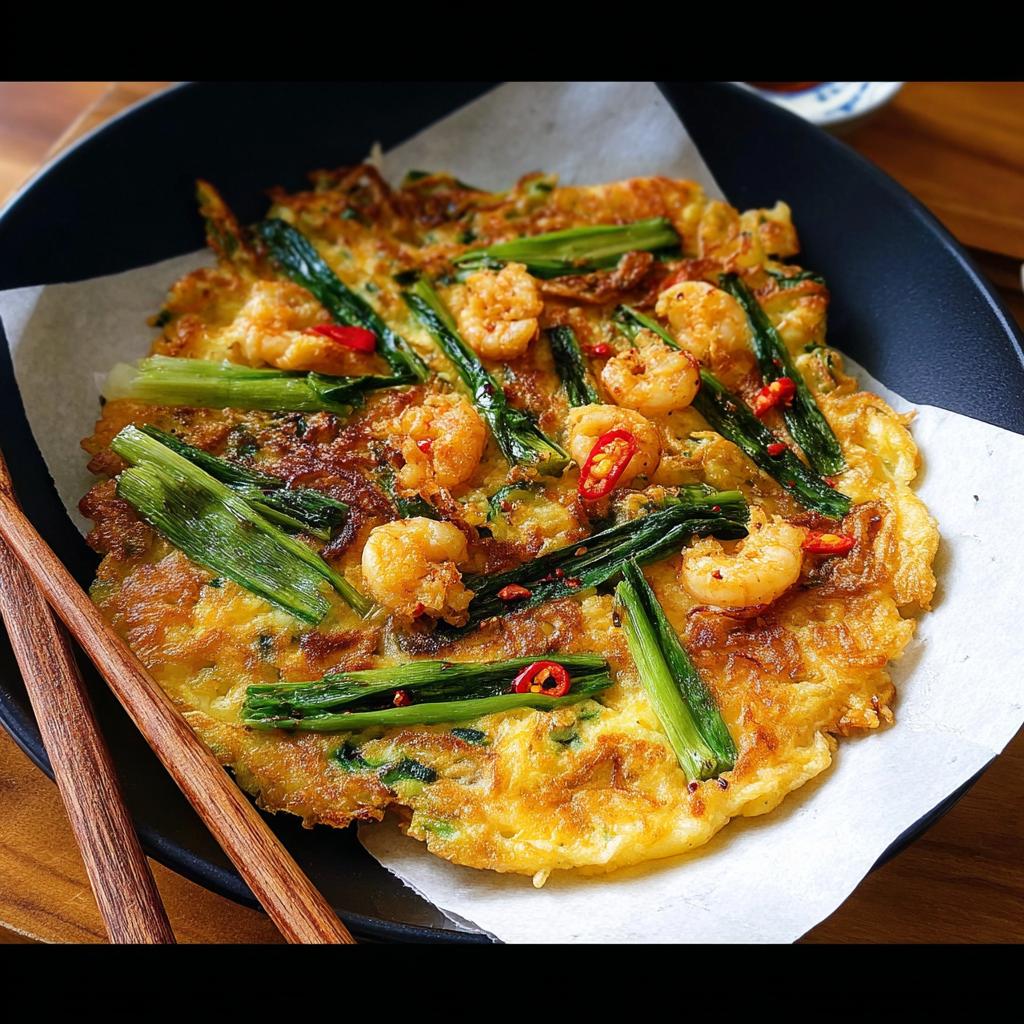
Korean Pancakes (Pajeon)
Ingredients
Equipment
Method
- In a medium-sized bowl, combine the flour, cornstarch, salt, garlic powder, and onion powder. Add the icy cold water and whisk well to create the pancake batter. Pour the batter into a measuring jug for easy pouring.
- Add about 3 tablespoons of cooking oil to a moderately heated frying pan and spread it evenly. Increase the heat to high and preheat the pan until it is hot. Be cautious as the oil heats up.
- Test the oil temperature by dropping a small amount of batter into the pan. If it sizzles, the oil is ready. Reduce the heat to medium-high. Pour just under half a cup of batter into the pan and spread it thinly and evenly.
- Arrange 6 green onion tops parallel to each other on top of the batter. Pour a small amount of batter over and between the green onions to fill any gaps. Reduce the heat to medium.
- Sparingly place calamari, prawns, and red chilies (if using) over the green onions.
- Drizzle half of the beaten egg over the pancake using a spoon. While it cooks, gently move the pancake in a circular motion to prevent sticking.
- Flip the pancake when the top is partially cooked, which takes about 4 minutes. This makes flipping easier. If needed, add more cooking oil around the edges to help release it. Press the pancake with a spatula a couple of times to make it crispy. Cook for another 3 to 4 minutes. Turn off the heat and transfer the pancake to a plate or cutting board.
- Repeat steps 2 to 7 with the remaining ingredients to make the second pancake.
- Slice the pancake into bite-sized pieces and serve with Korean pancake sauce.
Nutrition
Notes
Tried this recipe?
Let us know how it was!
Master of Global Fusion Innovation
My culinary adventure reflects my Lebanese-Italian heritage and a decade spent in the dynamic fusion restaurant scenes of Miami and Barcelona. I’ve made it my mission to prove that beloved global comfort foods can be successfully adapted for low-carb living without losing their soul, their cultural authenticity, or their ability to comfort.
With advanced training in molecular gastronomy and experience spanning Mediterranean, Middle Eastern, and Latin American traditions, I’ve developed what I call “respectful innovation” – culinary creativity that honors traditional cooking wisdom rather than replacing it. My alternative ingredient substitution systems are now taught in specialty diet cooking schools throughout the region.
Drawing from my trilingual upbringing, I understand how deeply food connects to identity and memory. That’s why my flavor-bridging techniques allow classic dishes from around the world to maintain their comforting, familiar qualities while meeting contemporary nutritional standards. I regularly share these techniques at international culinary symposiums and innovation events.
When I’m not experimenting in my Miami fusion kitchen laboratory, you’ll find me at local salsa dance venues – the rhythm and improvisation skills translate directly to my creative cooking process! My role as a foster parent to rescue rabbits has unexpectedly inspired some of my most creative plant-based low-carb innovations.
My personal low-carb journey began as a way to maintain energy for my active lifestyle, but it’s evolved into a professional mission of proving that healthy eating can be globally adventurous rather than restrictively limiting. Every recipe I create is a passport to culinary adventure, transforming kitchens into laboratories for exploring healthy versions of the world’s most beloved comfort foods.