Ingredients
Equipment
Method
- Pre-heat your oven to 400 degrees F.
- Cut the butternut squash in half lengthwise and place it on a sheet tray. Drizzle the flesh side with olive oil and a generous pinch of kosher salt, rubbing to distribute the seasoning.
- Cut about 1/4 to 1/2 of an inch from the top of the head of garlic, exposing the cloves. Drizzle with olive oil, sprinkle with a pinch of kosher salt, and wrap the head tightly in aluminum foil. Place the garlic on the baking sheet with the butternut squash.
- Bake for 40 to 45 minutes, or until the butternut squash flesh is tender and the garlic is soft and golden brown. The squash is done when a paring knife enters the thickest part easily.
- Allow the squash to cool for 15 to 20 minutes. Use a spoon to remove the seeds from the center of the butternut squash.
- Scoop the squash flesh into a blender. Squeeze the roasted garlic cloves from their skins and add them to the blender. Add 1.5 teaspoons of Kosher salt and about 1/2 cup of water. Blend until the mixture is smooth and uniform, adding more water if needed until the mixture is thick but spreadable. Set this mixture aside.
- Brown the butter in a saucepan over medium heat.
- Add the flour to the browned butter and cook for 1 more minute over low heat to cook out the raw flour taste.
- Slowly stream in the milk while whisking constantly to prevent lumps. The mixture will thicken initially but will thin out as you add all the milk.
- Bring the mixture to a simmer over medium heat. Once simmering, cook for another 2 minutes while whisking until the mixture has thickened substantially and coats the back of a spoon. Finish with a pinch of nutmeg. Turn off the heat and set the béchamel aside.
- Pre-heat your oven to 350 degrees F.
- In a 9x13 inch baking pan, spread a thin layer of the butternut squash mixture to coat the bottom of the pan.
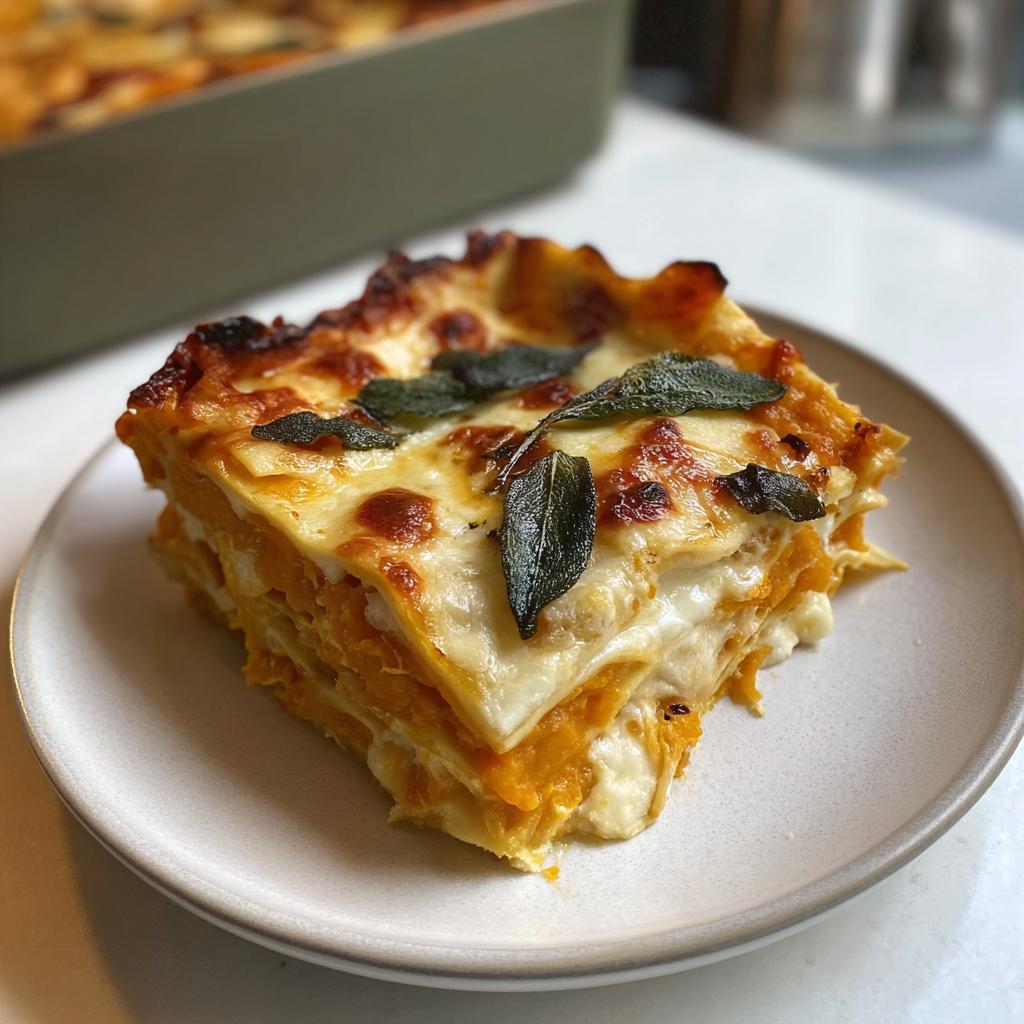
- Layer the lasagna: Top the squash with one layer of noodles, 1/3 of the remaining butternut squash mixture, 1/4 of the béchamel, 1/4 of the mozzarella, and 1/4 of the parmesan. Repeat this layering process two more times (noodles, squash, béchamel, cheeses).
- Top the final layer with one more layer of noodles, the last 1/4 of the béchamel, and the last 1/4 of each of the cheeses.
- Transfer the pan to the oven and cook for 45 minutes to 1 hour, or until the lasagna is bubbling and golden brown on top.
- While the lasagna bakes, heat 2 tablespoons of butter in a large skillet and add the sage leaves. Fry the sage leaves on both sides until they become crispy.
- Finish the lasagna by topping it with the crispy sage leaves. Serve the lasagna warm.
Notes
If you use regular store-bought lasagna noodles, you must par-cook them before you assemble the lasagna. If you buy oven-ready dried lasagna noodles or use fresh pasta sheets, you do not need to par-cook them.